Building hope
“Built by donors, sustained by patients, until the NHS changed everything.”
The only form of public health and social care in the early nineteenth century was provided for ‘paupers’ through the Poor Law. This offered basic support, paid for by local rate-payers. The wealthy were able to pay for private care, but the ‘middling-classes’ could not afford it.
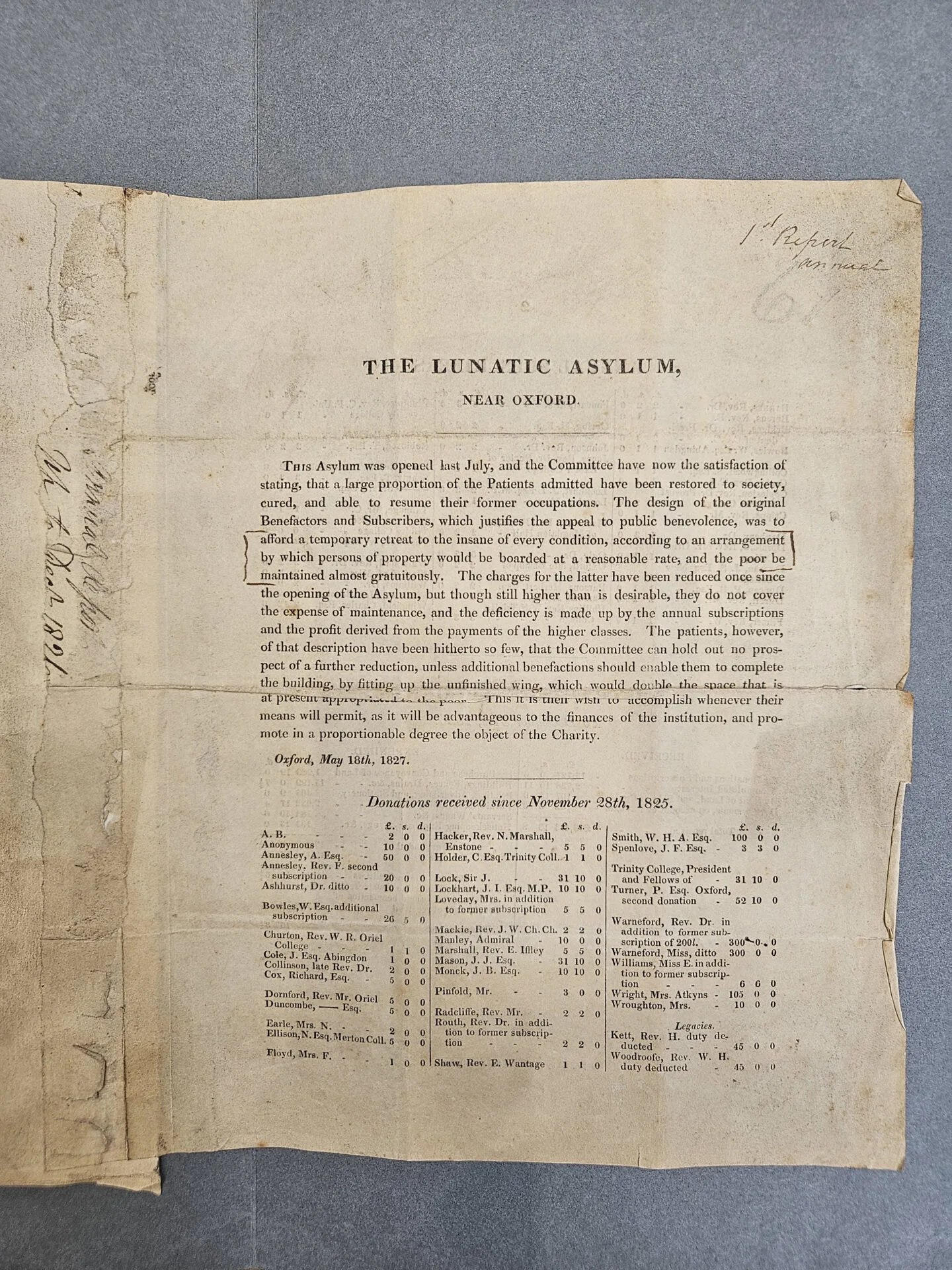
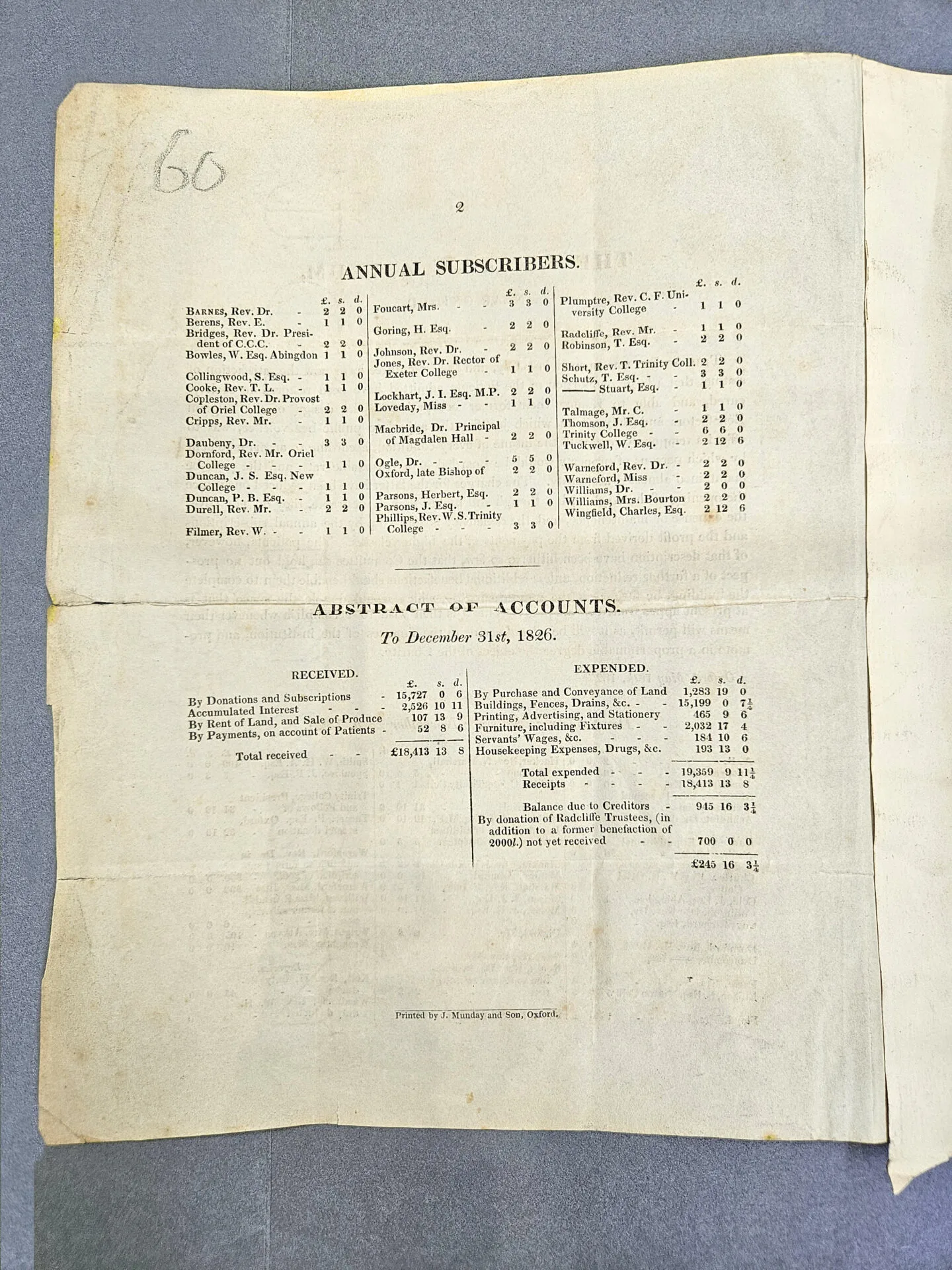
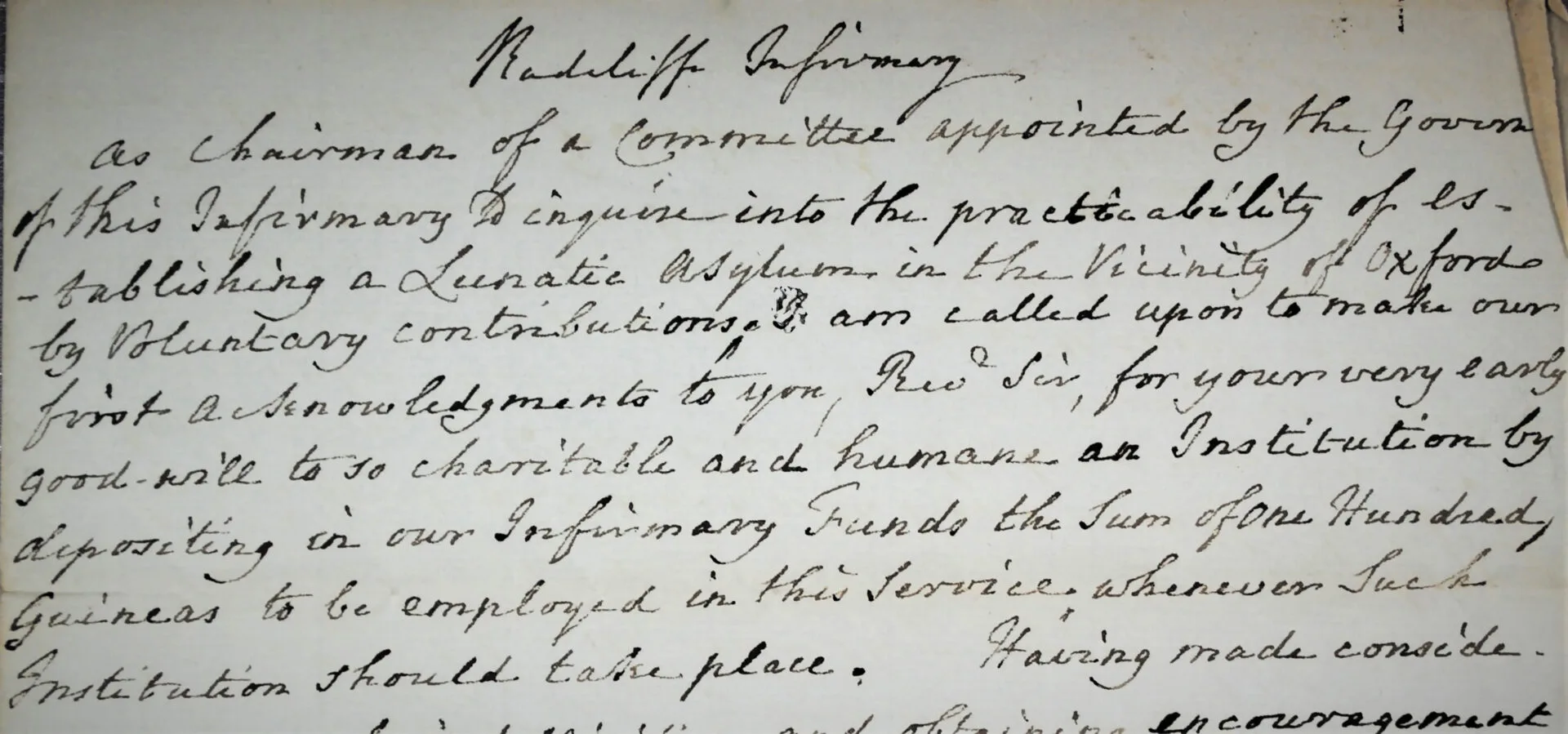
The Warneford was a charity, so an appeal was made for funds to build the hospital, and donations came from a wide range of sources. The University and individual colleges gave over a third of the money, with a substantial contribution from the Radcliffe Trustees.
Patients paid for their own care, with a range of different standards of accommodation at different prices, and funds available to support those in financial need.
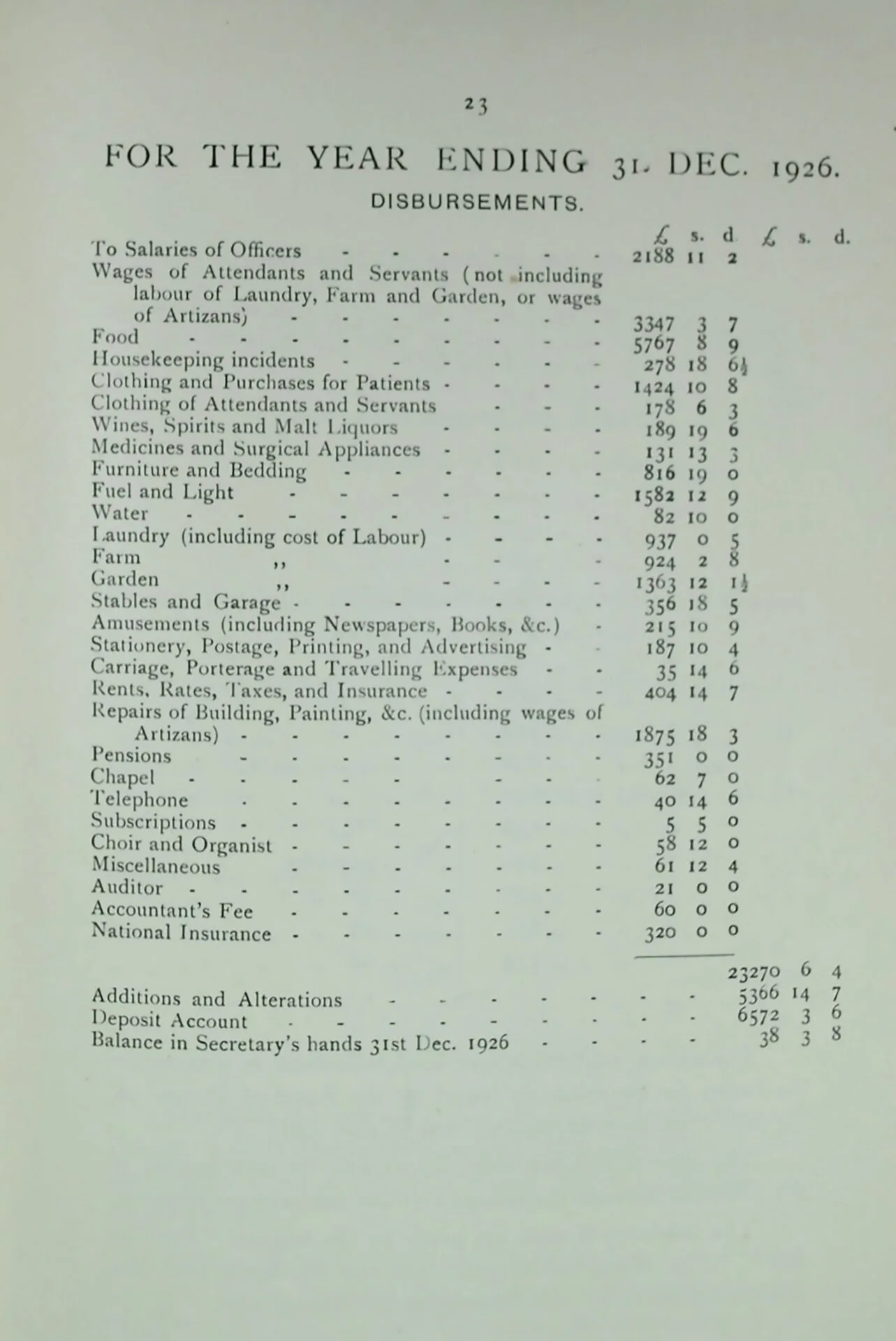
In 1948 the governors agreed to transfer the buildings to the NHS. They realised that remaining as a private hospital would be too expensive for the people for whom the hospital had been intended. Since then, the hospital has been free to users as part of the NHS.
Other services are provided by local charities, and people may pay for private services such as counselling, in today’s mixed economy of public, charitable and private mental health provision.
Designing for health
“Fresh air, ordered gardens, and calm surroundings — a 19th-century prescription for the mind.”
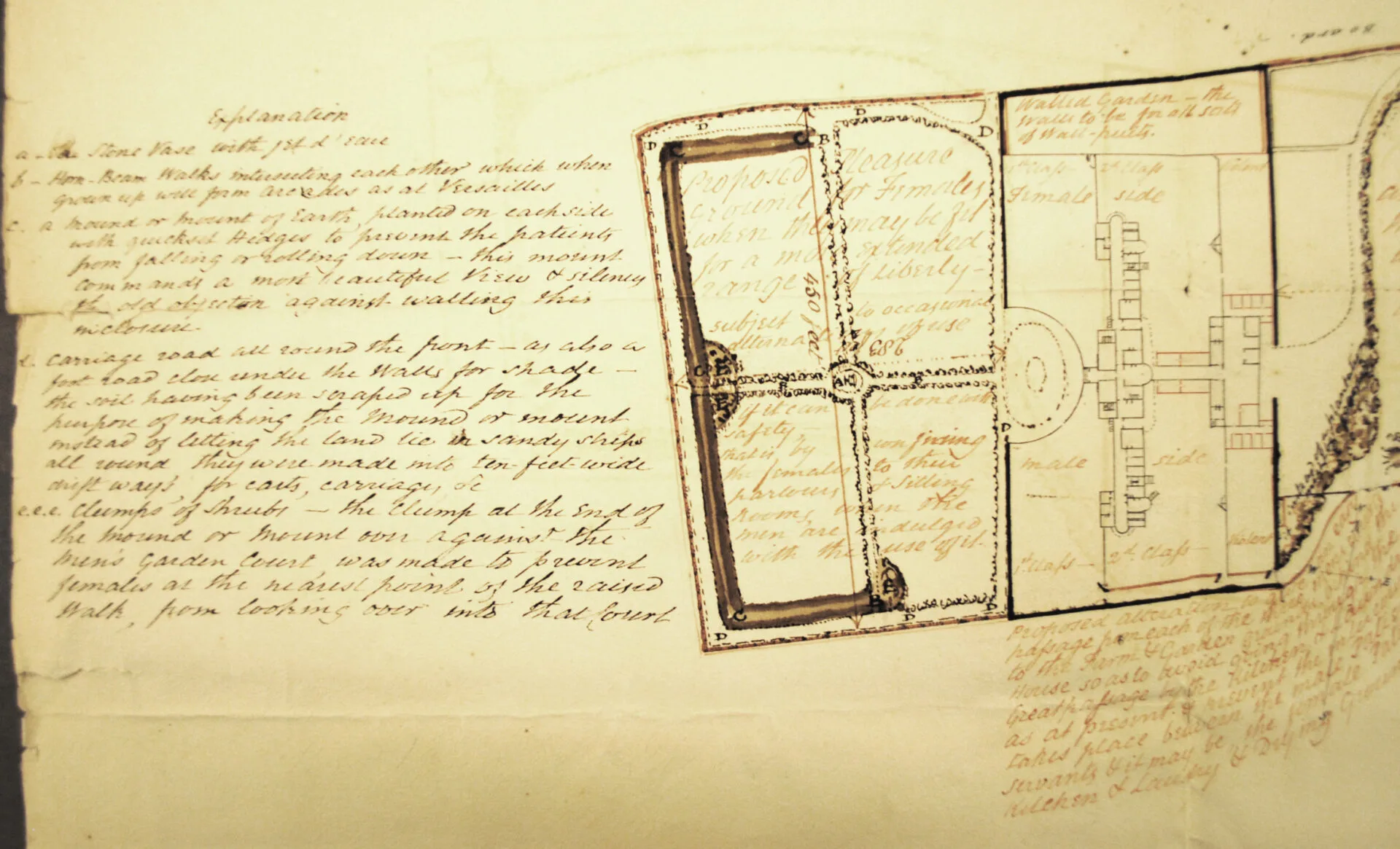
The architect Richard Ingleman paid careful attention to the original design of the hospital.
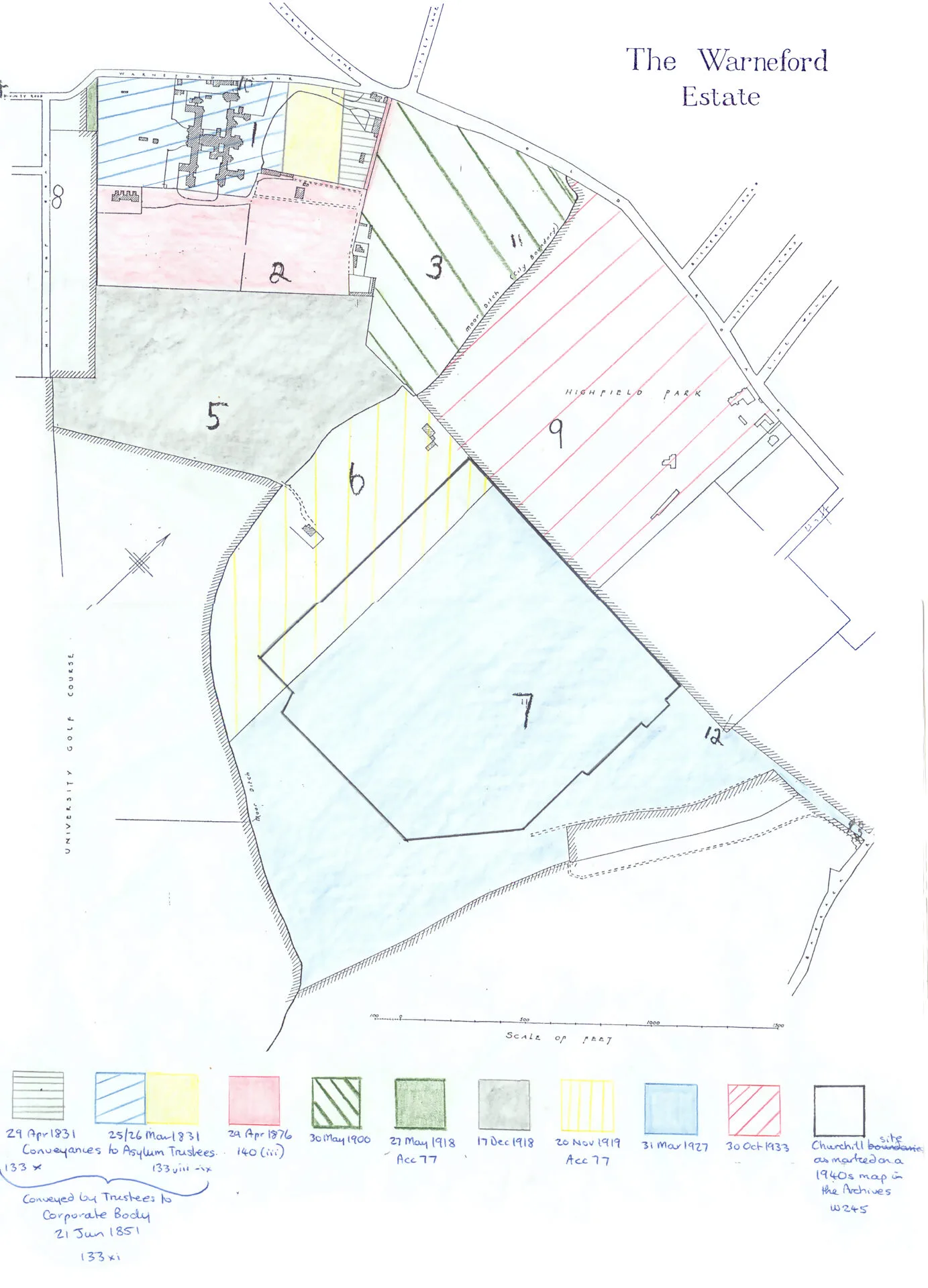
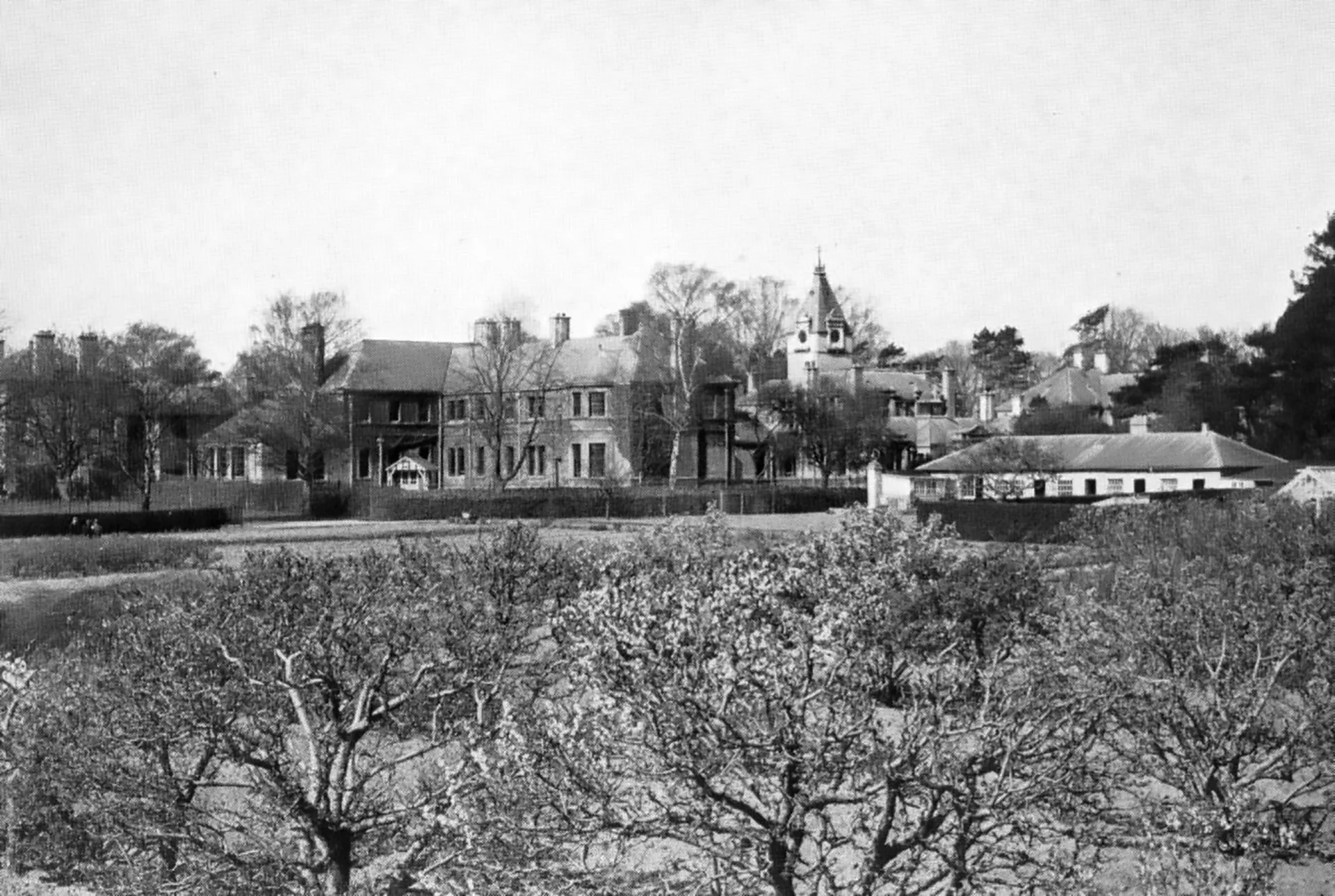
Eventually the grounds extended to 180 acres, with gardens, allotments, orchards and shady walks for both exercise and relaxation. Every effort was made to create a safe and attractive therapeutic space where a wide range of sports and activities could be carried out. Patients could also assist in the work of the hospital, by gardening or growing food. These activities were considered a key aspect of patients’ treatment.
This concern extends to the present day. The Highfield Adolescent Unit, opened in 2012, was designed to meet the needs of young people, with the internal space itself designed in part by young people.
Indoor and outdoor areas designed for people experiencing distress need to be both welcoming and safe, for service-users and for staff. These environments should offer space for a wide range of therapeutic and recreational activities. Modern design aims to involve not only skilled professionals, but also the people who will live and spend time in these spaces.