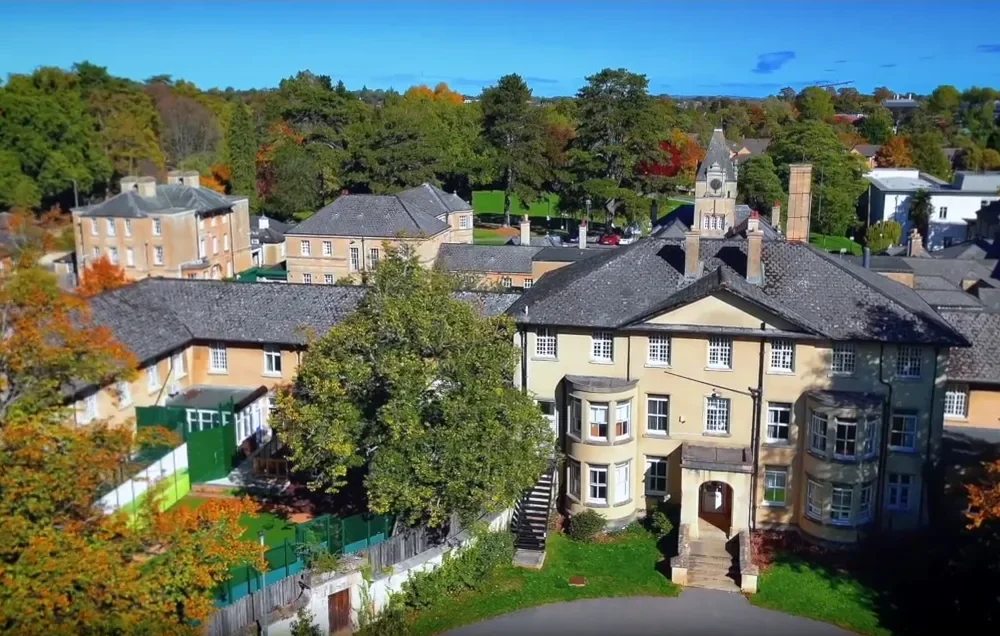
Alice Hicks – Service user and Activist
Interviewed by Jonathan Leach
Biography
Alice was first admitted, as an inpatient, to the Warneford Hospital in 1984. Since then she has had other admissions and has used outpatient services at the hospital. She describes her experiences of having unusual beliefs about her identity and how this lead to her becoming an inpatient at the hospital. Alice reflects on the treatments she experienced and on life as a patient at the Warneford. Whilst some staff seemed irritated by her, others were kind and understanding, which Alice appreciated greatly. Alice liked using the grounds of the hospital where she spent much time and she also liked the historical feel of the buildings, although she did not enjoy having to sleep in a dormitory. Another downside of the buildings was the lack of a family room where she could have received visits from her children in peace and quiet. Over time she saw a greater willingness by staff to give patients information about their condition, their medication options and the various possible side-effects of different drugs. Alice remembers the introduction of Cognitive Behavioural Therapy (CBT) and having to be assertive in gaining access to this treatment.
Transcript of audio excerpt
Alice Hicks
So in 1984… I was admitted to the Warneford with what was described as a florid mania. So I was all over the place. I’d been gradually sort of slipping into this, all sorts of strange things had been happening and getting messages from phones and really weird things and everything became very sort of symbolic and odd and obviously… one of the things happened as well, I became incredibly sort of confident in my own abilities and it was all amazing. But obviously it got more and more peculiar. And I think it sort of came when one day I sort of thinking to myself, look, I’m getting all these messages from phones and televisions and symbols and, you know, what’s going on? Why is this happening? Ah, I thought to myself, well, probably I’m probably quite a special person, that’s why it’s happening.
And then I suddenly realised, a penny kind of clunked. I realised who I was. I was Alice Christ, the second coming! So that was who I really thought I was. But obviously my behaviour was getting more and more weird and peculiar. And then finally the GP was called and had a little chat with me. And what was interesting then was he actually made a phone call, booked a place at the Warneford and took me up, which of course wouldn’t happen now. I mean, so he sort of deposited me in the Warneford. And I remember him saying, ‘I’m going to give you a little injection just to calm things down, help you sleep’. And he said, ‘I’m giving you enough to knock a horse out’. I remember him saying that. Well, of course he didn’t knock me out, so I was all over the place. But anyway, admitted to the Warneford, I remember eventually falling asleep. And when I woke up in the morning, in a kind of white reception room thing, I was lying there, and the door opened, a member of staff came in, and I remember saying, with my eyes closed: ‘Can you tell me, very slowly, who I am?’ And there was that, I had no idea who I was, I wasn’t Alice Christ, I wasn’t Alice Hicks, I just didn’t know, and I remember that first day, in Wintle Ward, just wandering around thinking I don’t know what am I in a play or something what’s going on I kind of knew I was in a hospital but I wasn’t quite sure why or what was happening but anyway I think the next day came back with a bang that I was Alice Christ so there I was in the Warneford.
I can’t really remember a lot about that first visit except it was all very confusing I do have a memory of a very wonderful member of staff and I’m not sure this was the first visit but this is very clear in my mind that I was being an awful nuisance to the staff, obviously. I was all over the place, not sleeping, wandering around and I remember this member of staff and I can say her name, it’s Danielle, she was a nurse, French. I remember her saying… not for shouting at me: ‘Get back in your room, go to sleep’, but: ‘Come into my office and we’ll have a coffee’. And she would sit and I’d just talk to her and this would be in the night And I remember she was a Christian, she had a cross and I remember talking about my faith. One thing I would say is I never mentioned to anybody that I was Alice Christ. I would imagine by my behaviour that they would know who I was. So I remember that you know those early times in Wintle and being kind of all over the place and doing things…
… I think it’s really staff on the whole were kind. Some staff could be quite irritated with you, obviously. ‘Why are you doing that? No, you can’t have any tea, your kitchen’s closed now’, and all that sort of thing, but others would say: ‘Oh, I’ll let you in, make yourself comfortable’. So some would be more than a job’s worth type of thing, but other staff… But I must admit, thinking about my experiences: one, the very excellent psychiatrists that I had, but two, the care assistants and the cleaners would treat you, ‘How are you this morning, love? Are you feeling a bit down?’ or whatever. So they just treat you as a human being, not as a patient, and your symptoms were just well… But I do remember thinking about my recovery retrospectively. And the beginning of that recovery I think was that nurse, Danielle, treating me as a frightened, confused human being rather than a patient. And I think that was really symbolically the beginning of recovering actually.
The thing then, there was a programme actually that you did every day. You more or less had to do it. It started off, I know there’s always a kind of morning, what’s it called, get-together with the patients and some staff. Yeah, I remember that, and I can’t remember what we talked about, but I used to have to go to that, I didn’t really want to go to it, but you had to sort of sit down and listen. But there was a program, it was definitely, you know, you had yoga or relaxation or discussion group, and you more or less had to go. And I do remember a lot of the time, because I was so active, I didn’t want to do relaxation and I didn’t, but you had to…
I mean, as time went on, you were given much more information. I mean, I started to look stuff up as well, but you were told what side effects were or what was the best one or this sort of thing and what things you could have.
I went to outpatients quite a lot. But I will say that some of the psychiatrists I had were just so good, and I remember things like as an outpatient and one psychiatrist. The thing about when you had outpatient appointments, you know, you could be kept waiting for ages. You just thought, I’ll wait for an hour to see, you know, this sort of thing. But one particular psychiatrist was never late. And one day he was late and he sent a nurse to say, ‘I’m very sorry, Alice, but I’ve been detained on the ward. I might be 20 minutes late’. And it’s like, wow, that was very respectful. But he was a particularly nice man.
Years ago, and I can’t remember the name, but anyway, this new therapy is coming in, cognitive therapy coming in. And I talked to my psychiatrist about this and he said: ‘Oh no, we don’t do it at Oxford’. ‘Okay’ I said, ‘oh, what a shame.’ Now, I’m not joking. Very soon after him being told we’re not doing it. from the main news, Southeast England news, zooming in on the Warneford and the Warneford’s doing this new therapy that’s just come in. Was I cross? So I went back and said: ‘Oi, you are doing it’. ‘Oh, well there wasn’t room on the course’. I said: ‘That’s not the point. I want to do it’. So I did do it eventually, and I got on in a group, but it didn’t work for me in the group, and I’ll tell you why, because we were doing something as a group and it was something about laddering, I think. I’m not sure what laddering is, but something happens. Something happens, what does that make you feel? What does that happen? And then something else happens, it ladders. And we did this laddering and I was doing it in my mind and suddenly I got to the point where I will die if that happens. And I was so shocked that my whole body sort of went, I ought to die. And I was obviously stunned and I just sat there like that. And for the rest of the session, I was sort of out of it. Now I thought to myself, if I’d been doing a one-to-one, I could have told the therapist. But in fact, it didn’t work for me in the group because it was suddenly too powerful. But I did do a CBT with a psychologist, he was lovely and that CBT worked really well because it was a one-to-one, I think, for me.
Alice Hicks
Yeah, I actually quite liked it, Warneford. because I do like old buildings, I’m not sure, historical, so I liked it. The only thing was it was dormitories and I’m sharing room with another couple of people. So we weren’t single rooms then, it’s the ‘80s.
Jonathan Leach
Were they smallish dormitories or quite large?
Alice Hicks
I suppose, well I think… I think in my dormitory we’d probably say six beds, I can’t quite remember how many beds but I think actually there was only one other woman and she was very angry with me and was always shouting at me and things and in the end they moved me upstairs in the Warneford. And there’s a bit scary bit there because there was a fire alarm, I was upstairs, there was a fire alarm going off and I thought no, I suppose I’d better wander downstairs and they’d forgotten that I was up there so they got the other patients outside or whatever. I was very cross with them. I said, ‘I would have been burnt alive’. Yeah, I think I quite liked… And the thing, of course, then, Jonathan, no, there wasn’t any locked wards. You could go anywhere you liked. And I spent a lot of time in the grounds, actually wandering out. I wasn’t under a section.
Jonathan Leach
Right.
Alice Hicks
And I remember I used to wander into kitchens, talk to staff, wander into the Department of Psychiatry, you know, all over the place. And actually that was very nice.
Jonathan Leach
Yeah, I can imagine, yeah.
Alice Hicks
But I think I was probably a nuisance because, you know, I was doing strange things like I remember organising a paper chase through the wall with bits of paper stripped up and that was annoying. And somehow I got hold of a bicycle. And I was… right… rode it through the ward and I think that was… But you see, you could get things outside then.
Yeah, and oh, I do remember something else, Jonathan, that my children were quite young, sort of 10, 11. They did come to visit me and they were very frightened. There was no patient’s family room at all. And there was somebody on the ward who was very loud and shouting and screaming and walking in and wandering. It was a mixed ward. And they were very frightened. They would not come and visit me again. And of course I missed them greatly. You know, I was in hospital for quite some time. I can’t quite remember that first admission, how long it was, probably a month. couple of months or something, well it wasn’t hugely long.
Jonathan Leach
Long enough to be away from the children.
Alice Hicks
Well yeah, but I do remember that, you know, thinking there really ought to have been a kind of room where families could go. I think, thinking back to those early times, the food was nice but there’s another ‘but’ here, I’m gluten intolerant I don’t eat gluten which I’ve had you know a lot of part of my life and I remember always saying I can’t eat pasta, I can’t eat pastry and I remember sometimes I just wouldn’t have much to eat because nobody was listening and I’ve got diabetes so I was saying well I can’t eat and I remember talking to the you know the ward the houseman or something one of the people saying: ‘Can you please have stuff that isn’t gluten’, and not much happening and actually going without food… But those early days I do remember going without food but it was, what food there was, it was quite nice.
How has it changed? I think… I mean obviously the activities certainly decreased over the years because I remember you know, this idea of people being a bit sort of bored, actually. Some of them were, you know, I think, I was on Wintle, I’ve been on Vaughan Thomas, and then the other place was, like Ashurst and the… but yes, how has it changed? I think less access, direct access to a psychiatrist. I mean, you know, you would be certain times when you would see a team. Also, the freedom, of course, when the space outside was sort of fenced off, so you were, and also the wards being locked. I think that made a huge difference.
Jonathan Leach
Were they locked regardless of whether you were sectioned or not?
Alice Hicks
They were just locked, because there was all things about drugs coming into the wards and everything. But, you know, I’ve had some nice experiences, certainly with psychiatrists. Some very, very lovely psychiatrists actually, very kind. But I do remember particularly wandering about a lot. And the grounds were incredibly… I think, very therapeutic and lovely and relaxing, really.