Participant 1
Interviewed by Molly Wilson
Biography
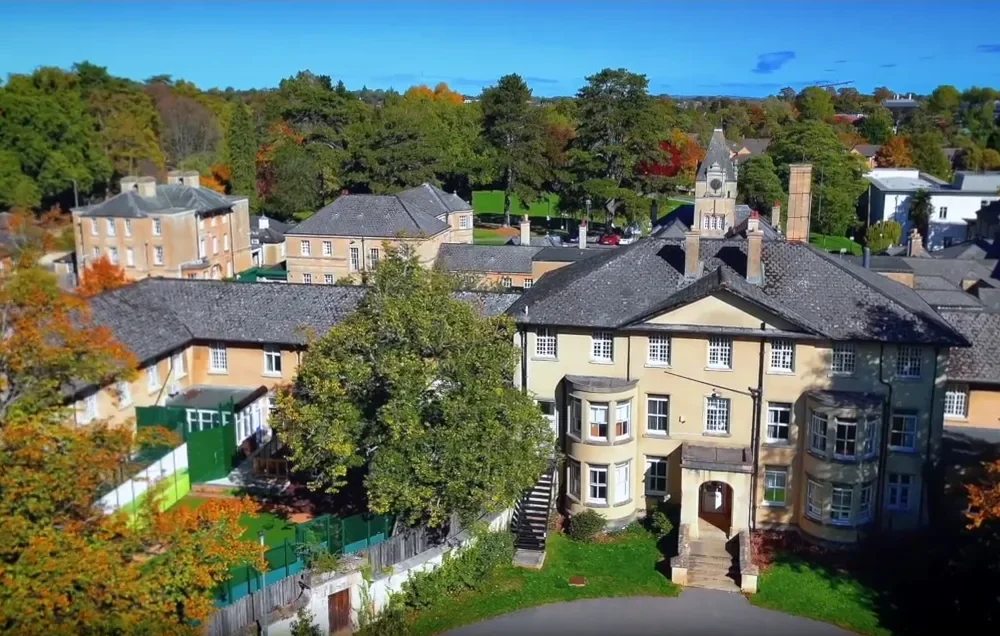
This clip is from an interview with an ex-service user, interviewed by Molly Wilson. The interviewee accessed mental health services after the loss of his wife over a decade ago, when he was admitted to the Vaughan Thomas ward. In this clip, he talks about the ward, his interactions with staff and other patients, and how his experience of the environment of the Warneford affected his treatment and recovery. Throughout the rest of the interview, the service user gives a chronological account of his admission, and also gives a detailed description of his experience as a day patient. If you would like to access the full interview, it will be available at the Oxfordshire Health Archives.
Transcript of audio excerpt
00:25:02 Interviewer
Okay. There was, a second ago you were talking about how you weren’t sure if that experience is what your friends expected. I was just wondering, kind of, you said you’d been to the Warneford once prior to being admitted. Was it what you expected?
00:25:16 Interviewee
I’d never been in a psychiatric. Well the bit I’d been in, was the research bit behind, so I’d never been, I’ve never been in a hospital where I was locked in, I’d never spent any time in a psychiatric ward with other patients, I’d never met a psychiatric nurse, I don’t think I’d ever been seen by a psychologist. It was so I didn’t know I was going to go, so I didn’t have any preconceptions. And when I got there, I just kind of took it. So I never felt I wanted to escape. I felt like I wanted them to get me better. And so there was no sense of, or certainly not in the early days, there was no sense of I need to get out of here. Later on, there was a sense of I need to prove I’m better because I’m going to need to go home at some point and I want to do that as quickly as I can. But at the beginning there was, yeah, I had no preconceptions of what it would be like and very, very little knowledge of what a psychiatric ward would be like.
00:26:24 Interviewer
I see. Yeah, because it was a long while ago and I feel like things are becoming a bit more open now and more talked about. Would you say or not really?
00:26:39 Interviewee
Not that much, and I don’t know many people who’ve been sectioned. I don’t know many people who have spent time, other than when I was there, a few, one or two people. But, yeah, I mean, I have this kind of sense that, and, I’m… I’m lucky that maybe they knew this, that it was likely to be a one-off. And yet a lot of the patients were people who’d been more than once and would be back again and would have to live with whatever was going on for them for the rest of their life. Whereas I feel like, yeah, I am aware that, you know, I might be a bit… excitable, or I might get a bit depressed, or I might be a bit on the bipolarity spectrum, maybe. And so if there are particular things that I’m maybe more vigilant. But I don’t think it’s going to happen to me again. And that wasn’t true for in, I don’t know, do I? But my sense was there were a lot of people in there that had got some pretty serious stuff that wasn’t going to go away.
00:28:05 Interviewer
You mentioned this when we kind of talked on the phone before as well. Would you be happy to tell me anything more about what you thought of the other patients, your interactions?
00:28:12 Interviewee
Yeah, I mean, what is interesting, so part of it was this kind of manic, I’m going to make friends with all of them, and some of them, that wasn’t easy. But there are people in there with vastly different conditions, and I compare it to a physical ward of, you wouldn’t put together someone with a head injury, with somebody with an infectious disease, with somebody with a… So the range of mental health problems that people have or issues that they have are huge. And you’re putting people in a situation where they’re quite up and personal with each other. There was one chap in there who couldn’t bear anyone to touch him at all. So you had to be really, really careful if you had to go behind him when you were all sitting down for a meal. And so, and occasionally he would completely lose it. There were other people in there, particularly people who had just arrived, who there’d suddenly be an emergency and there was some sort of alarm and the nurses would all be off in that direction and then somebody would be put in their room and calmed down. And there were a couple of occasions where that happened where I went and locked myself in my room for my own safety. Whether I was at risk or not, I didn’t feel, it didn’t have a lasting impression on me, but I was, there were a couple of times I thought, yeah, I’m getting out of the way here. There’s no point in, firstly, there’s nothing to do with me. And secondly, I don’t want to be in the crossfire here. So that was interesting. It was, you know, you’re with people who are unpredictable. You’re with some people who are incredibly low, people who can barely smile and that’s quite, affects you, it doesn’t make you… I used to, I would sometimes do this game with my visitors because I said I’d had a lot of visitors, where I’d say, okay, see that person over there, member of staff or patient, what do you think? And I mean, I’d choose one that wasn’t obvious, because, there was no, there were no uniform or anything, so there wasn’t very much to know the difference. I mean, it was very clear to me who was staff and who was patients, but you can also have some, because you don’t know anybody’s diagnosis, or if you do, you know their version of it, you don’t know how to take what they’re saying. So some people, there was this guy there who was having, trying to get into university, and I was working in a university at the time, and I was kind of giving him advice about how to do it. And it wasn’t until later on I was thinking, you’re not ready to go to university. You know, you’ve just been… spent time as an inpatient in a psychiatric ward, this was kind of August and I said, you might be able to get a place in September. And I was being a fixer and it was part, I mean, that was part of my own kind of mania, I guess, was, the hangover of it was, I get into a conversation with people. I made some good friends there and there was a quite, I mean, they’re all men. But there were some quite young men in there who, as a parent, weren’t that different in age to my oldest at the time was 19. And there was a guy in there that was probably about the same age who’d done a lot of self-harm. I’d never seen self-harm up close before. Perhaps it wasn’t quite as common in those 10, 11 years ago as it is now, but I mean it was obviously about, but I didn’t spend time in circles where I saw I was aware of it, so that was interesting. And then, I made friends with someone and I look back on some of the things he talked about and realised that actually, the friendships are, what are they based on? I never saw these, I never saw any of the people who were inpatients again. When I was the outpatients, I saw a couple of people again, but never saw any of those people again. You build up quite a close bond, you do all these things together, all these activities together. And yet, you almost, I almost felt sometimes that it would have been helpful to be given them some idea of how to behave with these other people. But on the other, because this person doesn’t like being talked to, or this person doesn’t like loud noises, or, this person’s very depressed, don’t talk to him about this. But ethically, I’m sure it’s not possible to give you any information about other clients. But you’ve got all this kind of… I hate to say it; it feels like a bit of a zoo, of all these different types of people and the things that they’ve got going on for them.
00:33:55 Interviewer
That sounds really quite complex.
00:33:59 Interviewee
It is complex. And I think it’s not helped by being in a very old building that’s not really, that’s not really been purpose built for the clients you’ve got in there, for the patients you’ve got in there. I think one of the things that was hard was finding a quiet space apart from just going back to your room, which sometimes found and felt a bit, I don’t know, you were escaping completely, but it was quite noisy most places. The television was on in the background. But there was, it was lots of interesting activities. Your day wasn’t, they structured things. I played an awful lot of table tennis. I’m quite keen on table tennis anyway. And the staff, some of the staff played as well. But then, although that in one respect that was very good for me, it was something else to focus on. It became a bit of an obsession of getting better and better. And so rather than calming me down, I was finding that the table tennis was getting me all… So I was, towards the end I was able to self-regulate that and think, well, I’m not going to do too much of this. Similarly, you know, I had, you could have three lots of visitors a day. So I did have three lots of visitors a day because there was my sister in the background kind of making a list of who all these people who want to come and see you. In retrospect, that was too many. It was too much, because every time someone came, it was like, I’m going to show you that I’m all right and I’m going to make sure you’re all right with what’s happened. And it was all, you know, once again, it was that kind of slightly manic interaction with somebody. And people came a long way and, and they didn’t necessarily understand what was going on. I don’t know what they were told. Two of my kids couldn’t come for a while because they were under 18 and they had to have special permissions and special ways of…, so that was, must have been tough for them. One of them, I’d shared with them the writing that I did and talked to them about it and one of them said how arrogant I felt, they felt I was at the time. And I know what he means that, you know, I had an answer for everything, you know, and I was, I was, I thought I was in control of everything and I could completely understand why this had happened and what was going on. And I think I’m not a very arrogant person. And so that must have struck him as a bit odd. But hopefully, I mean, he was 17, that one. He was able to realise that was part of my illness.
00:37:18 Interviewer
Yeah. Gosh. Yeah, that sounds, it’s just an extra layer of complexity on top, having to look after children.
00:37:24 Interviewee
Yeah, yeah yeah. Well, I wasn’t really looking after them, and I didn’t see that much of them, but you were asking me about, you know, the other patients in there and it was, it was… The other thing that was happening for me was that I had come from a very intense hospital experience with my wife being in Sobel House for two or three weeks, where I was constantly thinking about what she needed and where they were talking to the staff about what was happening. Immediately I was plunged into another similar environment where, I was doing it, I was doing it for me, but I was still, I used to joke that I’d have been better off hiring a room in the Randolph and getting a private nurse just to calm me down, but keep an eye on me, or that actually some of the ways of what the ward was like were counterproductive for me because actually it wasn’t calming me down. It was stimulating me.
00:38:39 Interviewer
Yeah. Yeah… sorry, just to go back to what you were saying earlier about the building and being fit for you. Can you tell me anything more about the layout or what you remember?
00:38:48 Interviewee
So the layout, I mean, it’s a Victorian building, at least, and it’s 200 years old, so it must be, mustn’t it? So… It’s lots of big rooms. There’s a big dining room. There was a television room. There was a kind of games area. I don’t remember it that clearly, but I do remember thinking it would be lovely to have a calm room, you know, with some calm music and some, and there were other rooms that we went off to and have a discussion or watch a film and talk about it. There was lots of that kind of thing going on as well. And I went outside quite quickly, so they’d take small groups out to play boule or something in the grounds. And relatively quickly, I was trusted to go out with my visitors and go for a walk around the grounds. But the building itself, I don’t know, it just, parts of it felt just felt big and old and not quite right. And then parts of it felt, and there were bits of it that felt a bit like cells, So the room that I was in to start with was obviously one where they were keeping more of an eye on you. And then I was moved into one that was less like that because the one they’re keeping an eye on you is noisy at night because there’s all these people, well, occasionally there’s people shouting and things going on, whereas you move to the quieter wing and it’s all kind of a bit calmer again.