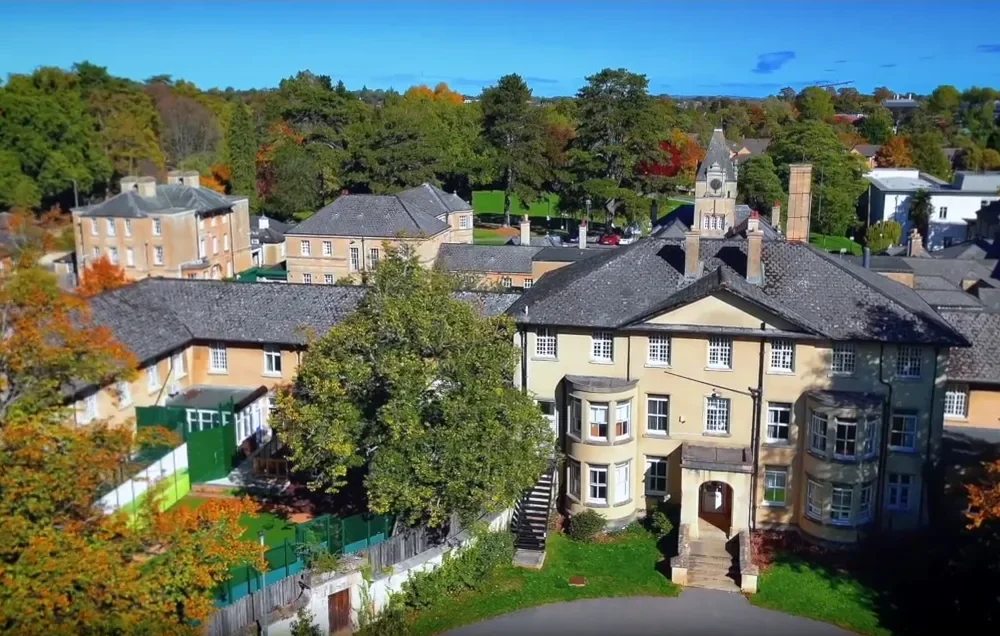
Participant 4
Interviewed by Molly Wilson
Biography
The interviewee in this clip has suffered from mental health issues for much of her life, but is also a talented artist and poet, as well as devoutly Methodist in her faith. The interview was conducted by Molly Wilson. The service user has had multiple admissions to the Warneford, spreading over several decades. In this clip, she describes her first impressions of the Warneford during one of her admissions, as well as her interactions with staff members and the day-to-day life on the ward. Her wider interview charts all of her interactions with the Warneford, from when she first moved to Oxford five decades ago, through to the art piece she created for the chapel more recently. If you would like to access the full interview, it will be available at Oxfordshire Health Archives.
Transcript of audio excerpt
00:18:07 Interviewee
I’ll just say… why I found it terrifying first going in as an inpatient here.
Interviewer
Absolutely.
Interviewee
Seeing bars on the windows and wondering whether I would be ignored in the way that the nurses in France tended to ignore me. There was a happy outcome to that. I did put on weight and keep it on. And things weren’t that bad all the way through in France. We’ll leave it there. Yeah, just being what felt like incarcerated again. But I wasn’t. Obviously, I wasn’t in a locked room or anything when I was first admitted here. Just the strangeness of it, really. It was, the first one was Vaughan Thomas, I think. And it was a mixed ward at that time. So that was something that I found difficult, especially since there were some men who were a bit sort of unusual.
00:20:03 Interviewer
I can imagine, yeah. So… What was the kind of procedure when you were admitted? Were you examined or were you shown around the ward?
00:20:17 Interviewee
Yes, they showed me around the ward. They put me in a single room initially. And I had a talk with a doctor. And I think at that time, it was still the case that you got a different doctor each time you talked.
00:20:50 Interviewer
Right.
00:20:51 Interviewee
But talking through my experiences was a big part of getting going on the admission.
00:21:08 Interviewer
Yeah. Sounds quite full on. Quite intense.
00:21:13 Interviewee
Yes. It was quite full on.
00:21:16 Interviewer
Yeah. Wow. And kind of once you’ve been admitted, what was day-to-day life like on the ward?
00:21:24 Interviewee
There was… Some inpatient activity you could go to… you could go for… oh dear, I’m sorry, I keep forgetting the words.
Interviewer
It’s okay.
Interviewee
Occupational therapy.
00:22:02 Interviewer
Okay.
00:22:04 Interviewee
You could go for occupational therapy, which I did. And you could go for walks with a nurse. And you could at that time go into the chapel.
00:22:26 Interviewer
Okay.
00:22:29 Interviewee
In fact, I found it very interesting. I went to the Museum of Oxford to look at the panels, the banners.
Interviewer
Yeah.
Interviewee
And I noticed that part of the regime was that people should be able to go to the chapel twice a week. That was the standard. If they wanted to, I don’t think they were forced to if they didn’t want to.
Interviewer
Yeah
Interviewee
But religion is very important to me and I benefited from the fact that at that time one could go into the chapel, always with a nurse or a doctor or maybe a chaplain. There wasn’t much evidence of the chaplains, actually. I think there was only one chaplain at that time. And I don’t think I ever spoke to him. I don’t think I really knew how to get hold of a chaplain the first time.
00:23:56 Interviewer
Was there just not very much information about the ward, or about the hospital on the ward?
00:24:01 Interviewee
No, not very much.
00:24:07 Interviewee
It’s difficult going back, remembering what was what then compared with further on. One thing that I think was universal over those different admissions was that there was an awful lot of waiting, waiting around for your meds, for your doctor to come and see you, for something to happen. There wasn’t very much going on in the ward itself and there wasn’t very much to do, or not much that you could do except when your relatives came in and you could play games and that sort of thing. But mostly the people who were also inpatients were in too deep a state to want to engage in that sort of thing.
00:25:20 Interviewer
And, how did you busy yourself then with nothing to do?
00:25:27 Interviewee
Reading, at that time, possibly smoking, although I gave that up quite soon afterwards. I think the most important thing to me was to try to understand myself and why I was where I was and what could help. And I started writing poems every day. I’ve always written a lot of poetry, but over those 8 admissions, and mainly in the more recent ones. I wrote approximately 1,500 poems.