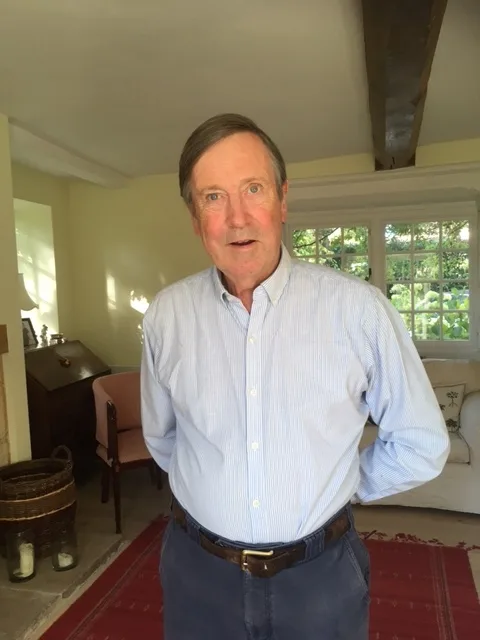
Dr. Robert Mather
Interviewed by Julia Buchanan
Biography
Dr. Mather was interviewed by Julia Buchanan in September 2025. Dr. Mather was born in 1952. He studied medicine at Merton College, Oxford University. After qualifying, he initially completed jobs in paediatrics and obstetrics but then decided to become a General Practitioner. He returned to Oxford and became a GP at the Jericho Health Centre in 1980. He was later a GP Partner at North Oxford Medical Centre until his retirement in 2013. During his career as a GP, Dr. Mather developed a particular interest in patients’ mental health and came into contact with the various psychiatric services at the Warneford Hospital. He became a “Section 12 approved” Doctor (qualified to assess and retain mentally ill patients under the 1983 Mental Health Act) and also trained other doctors in this field. He was a Mental Health Act Commissioner 1997-2009, and later a member of the Care Quality Commission.
The excerpt:
In this excerpt, Dr. Mather reflects on how he became particularly interested in mental health in primary care. He talks about the expansion of mental health services in local communities, including the development of a counselling service for students, and the embedding of mental health care professionals within General Practice, which made care more accessible and familiar for service users.
The full interview:
The full interview includes the following topics: experience as a medical student at Oxford University, decision to go into General Practice, developing interest in mental health, introduction of mental health professionals into GP surgeries. Also, role as “Section 12 approved” doctor and role in teaching students and other doctors. Dr. Mather comments on the high quality of care at the Warneford Hospital, changes in support for students’ mental health, and the impact of the physical environment at the Warneford. The full audio recording and transcript can be accessed at the Oxfordshire Health Archive.
Transcript of audio excerpt
Julia Buchanan
A lovely new building. And it sounds like that you developed a particular interest in your patients’ mental health as a GP?
00:08:01 Dr. Robert Mather
Yes, that’s fair to say. I mean I was interested in all areas of their health but particularly became interested in mental health, partly by being married to a psychiatrist, I think. But I definitely was interested in mental health and providing good mental health services in primary care.
00:08:26 Julia Buchanan
Do you think there were other factors in you developing that interest, as well as perhaps being married to a psychiatrist? Can you say why … you were interested in people’s mental health and physical health?
00:08:45 Dr. Robert Mather
It’s difficult to know really, but I felt that mental health services were improving and needed to continue to improve. Touch wood, I was never the recipient of any mental health services, but I knew people who were … things were getting better … Mental health services were developing. There was the development of a student counselling service, for example, and I generally saw it as an expanding area which was meeting some unmet need.
00:09:32 Julia Buchanan
And I know later on you became a Mental Health Act Commissioner. But just thinking of you having this special interest in mental health, were you involved in teaching other doctors or students?
00:09:57 Dr. Robert Mather
Yes, both. I was a GP trainer, which meant we always had a young doctor who was training in general practice in the practice. I was also a course organiser for the vocational training scheme, which meant organising the general training scheme. And I taught medical students, so yes, all of those things.
00:10:22 Julia Buchanan
And did you see, over the years, did you see the mental health sort of component of those training courses change … and possibly expand?
00:10:33 Dr. Robert Mather
Expanded, yes. We taught far more about mental health and GPs were taking on more and more different roles, which included more mental health work, as well as employing psychologists and counsellors and other people to do it.
00:10:54 Julia Buchanan
Yes, I think … you said that was a big change, psychologists, counsellors actually coming in and being embedded in the surgeries.
00:11:05 Dr. Robert Mather
Yes, it was. Change for the … a very good change, yeah.
00:11:10 Julia Buchanan
And how do you think that helped your patients?
00:11:16 Dr. Robert Mather
Well, I think it helped them to be able to see someone of one of those professions in the primary care setting, rather than having to be referred to a hospital outpatient clinic, for example, which would have been more common in the past. I think it’s the approachability and the fact that it’s a local service in a practice with whom you hopefully have a good relationship. So all of those things help, I think.