Keith Hawton – Professor of Psychiatry
Interviewed by Jonathan Leach, 5th Jan 2026
Biography
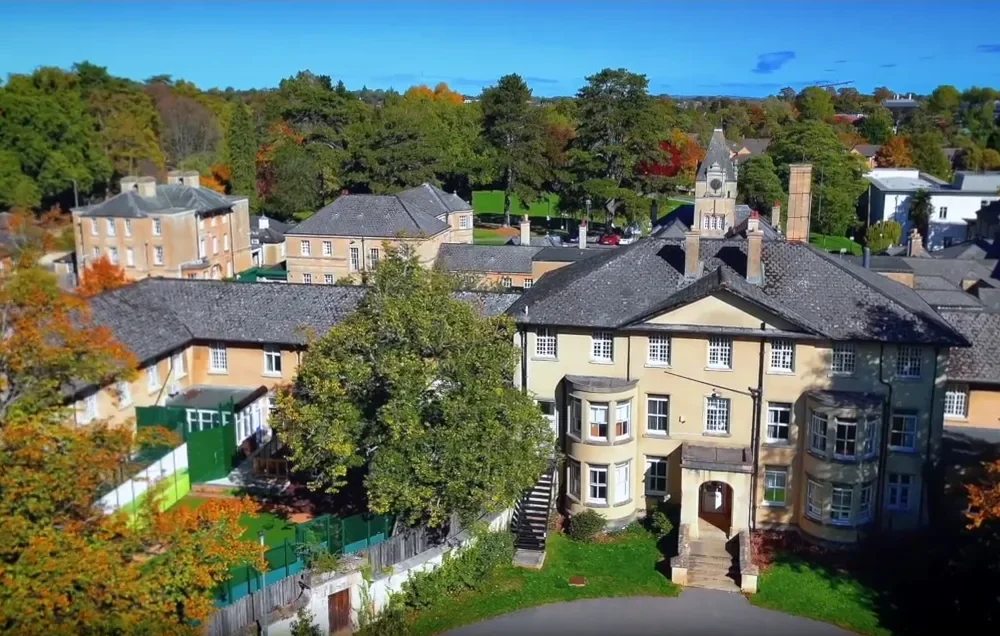
Keith came to the Warneford in 1970 and stayed there until his retirement. For a time he ran the Wintle Ward before going on to become a specialist in self-harm, suicide and sexual mental health issues at the hospital. Keith describes how, when he first joined the Warneford, some of the treatments seemed quite outdated, although staff were generally carrying out their duties out in a caring manner. However, treatments for patients changed and developed in tandem with research carried out as part of the hospital’s relationship with the University of Oxford. During his long career Keith saw the beneficial impact of new forms of medication and the development of various types of psychotherapy. He was very aware of the historical heritage of the Victorian hospital and was active in trying to preserve many of the fixtures and fittings which gave a taste of the institution’s past. He appreciated the contributions that the gardens made to the hospital’s healing environment. Keith talks about the various role and people involved in providing mental health services at the hospital and reflects on some of the differences between the Warneford and Littlemore Hospitals in Oxford.
Transcript of audio excerpt
Keith Hawton
I started in September 1970 when I’d I got a locum post with Doctor Seymour Spencer, and I’d wanted to work at the Warneford. While I was still a medical student, I had discussions with one of the consultants, William Parry-Jones from Child and Adolescent Psychiatry, about what I needed to do and whether I needed to do more medicine first and so on. And also Michael Gelder, who was of course the first professor of psychiatry. So I was very keen to stay in Oxford and I liked the Warneford and very much wanted to train there.
Jonathan Leach
What were your initial impressions of the Warneford?
Keith Hawton
Well, it’s interesting. I mean, looking back now, of course, one views things in a very different light. And I was thinking about this earlier. Some of the treatments, for example, that I was exposed to, became aware of, were very much psychiatric history. For example, I had one patient where the consultant arranged a leucotomy, which of course was on its way out at the time. And also that particular consultant believed in insulin coma therapy, you know, putting people to sleep for periods to sort of give their mind a break, waking them up for meals, but basically they spent the rest of the time asleep for two or three weeks. And I mean, these were treatments which have, of course, long been discarded and for which there was very little evidence of effectiveness. So, and of course, the other thing was that the therapies we had available at that time were really quite limited when you think about them now, particularly the drug therapies and side effects were a major problem, particularly for drugs used to treat psychoses, you know, the phenothiazines and so on. So side effects of medication were a major problem. And the psychotherapies really of the kind we have now were in their infancy and they were just beginning to develop. So it was a very, very different situation. On the other hand, I would say that the care for patients in the humane sense was generally very good and the staff, by and large, were very caring. And so that side of things, I think, was very positive. But it’s a very different sort of circumstances to what we have now in terms of clinical practice.
It was interesting because there was a lot of the historical aspects of the Warneford Hospital were present. So, I mean, one example is the furniture. There was a lot of very beautiful old furniture going right back to, the early days of the Warneford. I set up what was called an ‘environmental group’ to look after furniture and other historical aspects of the Warneford. And so in some ways it was a bit of a museum in terms of historical elements. And of course there were locked wards and quite, there were sort of, I guess, divisions within the Warneford in that there were particular, consultants who looked after particular areas of the Warneford, and they were all very strong characters and had somewhat differing approaches, which was interesting.
The grounds were beautiful. We had the back of the Warneford, where the old adolescent unit is now, it’s now closed. That area was a beautiful garden and really had been, I guess, pretty well maintained from, historical days. And of course that used to be the front of the Warneford in the original setup, yes. So where the path curves round there, that was where sort of carriages would arrive and bringing people to the hospital and that was the original front of the hospital and then it was and turned round. So it was a very attractive place of personal interest because then we had the cricket pitch which had been there since the original days of the Warneford. It’s sadly no longer there
Michael Gelder, who was really my boss then, was very keen that his people in his department, at the junior levels were able to get good clinical experience and function really as a consultant really, although we weren’t, but also protected their time for doing research. So for me, it was a hugely influential period, such that when I became a consultant in 1984, I already had a research programme, had grants and so on, and was able to continue the academic work while running an extremely busy clinical firm at the Warneford. So then I basically was a consultant running Wintle Ward, the whole of Wintle Ward, which I think was 25 beds and it was cut down to 23. And so I was running a 23 bedded unit. We had outpatient clinics. I’d also developed an interest, which was again influenced by John Bancroft, in treatment of people with sexual problems, and I ran the sexual dysfunction clinic and did training in that. So it was a pretty busy time, but it was fantastically interesting.
Yes, the… I mean, the teams then were obviously all the nursing, the nursing staff, but there were medical staff. I, because Michael Gelder was sort of still, in a sense, my boss, he made sure that I had quite a lot of trainees, but including at senior registrar level, which was great. We also had social workers, some really good social workers, and in some ways, particularly before we sort of moved into community… more community working, they were pretty well the most important members of the team in some ways. And we had the clinical psychologists working with us. So I guess that was the main components of the team, the medical staff, the nursing staff, social work, clinical psychology.
Jonathan Leach
Was there any Occupational Therapy input?
Keith Hawton
There was an occupational therapy department at the Warneford, and people from the department would come onto the ward. And I guess in a way they were part of the ward team, but they were mainly focused within their department on the Warneford side.
One of the big problems was that rehabilitation, so-called, psychiatry, was at really at Littlemore. And I think the two sites… the two sites, having major psychiatric services on two sites was quite a negative, and Littlemore had always, been regarded as the, place for, I mean, when the Warneford first started, of course, it was very much a sort of private type of setting for people of somewhat higher social class and so on and whereas Littlemore was very much the asylum. And that history influenced the public in the area and their views of mental health care. And so, the Littlemore was always thought… it was the place you’d go to if you were really crazy, whereas Warneford, was for people with lesser problems. And that sort of division and its influence on… the public were very well aware, I think was quite a negative aspect of psychiatric practice. And so that moving people into rehabilitation care, which was primarily from Littlemore, was a big challenge. And I certainly remember some cases where it really had negative effects on patients, partly because of what they thought they were going to.
Yes, I mean, the Warneford always had a very strong history. This is going back before the University department started. I mean, before my time, because the University department started in 1968, and before that, there was a very strong relationship between the Warneford and the University for students with mental health problems. And when I was a junior, we had quite large numbers of students coming to the hospital, not necessarily as inpatients, but coming up as day patients. And I mean, I never know whether it was apocryphal or not, but apparently one year… because students used to come and sit their exams at the Warneford, and apparently one year we got more Firsts at the students at the Warneford than the top college in Oxford [laughs]. And it was very much influenced by May Davison, who was the senior psychologist and a rather wonderful figure who headed this psychology department. And she was very influential in that relationship with the University and students coming to the Warneford.
I think it’s a good environment. I know the hospital now is antiquated, but it’s a good environment, a lovely setting. It’s within the city, which I think is important, but at the same time is on the edge of some open areas, which makes it a nice environment. For me, the great strength was the academic department and the influence that had on clinical practice and the relationship between academia and the clinical service which has been positive in both directions, of course. I mean, the fact that new therapies have become readily available at the Warneford because of the University department. Partly, of course, that would have been research investigations going on in relation to particular therapies, both psychosocial and pharmacological and to some extent policy. That for me is the greatest strength of the Warneford. And of course now the academic department is probably the number one psychiatry department in the UK. And I think that has brought great benefits to the Warneford as a clinical service, as a clinical setting.
The Warneford was, you know, where it was all happening. So when one looks back over the years, you know, it’s Oxford’s mental health practice and research and innovations have just been so influential in terms of psychiatric practice, not just in the UK, but further afield.
Jonathan Leach
So it seems not surprising that you spent your whole career basically there.
Keith Hawton
Absolutely. I did toy with… well, I did look into trying to get a senior academic post elsewhere. I’m glad I didn’t. I mean, in a way, I was… you could see it as a bit sticking at home, staying in the same place all those years. But in terms of what I was able to do, and I was lucky enough to be able to continue doing research for many years after I stopped doing clinical practice, And I have to say, it was the Warneford that allowed me to do that. And I’m extremely grateful.