Marion Allsop – Social Worker
Interviewed by Jonathan Leach, 5th Jan 2026
Biography
Marion worked as part of a team of professionals, led by psychiatrist Willaim Parry-Jones in the 1970’s and 1980’s, at the Highfield Adolescent Unit in Oxford. The Highfield Unit provided both inpatient and outpatient services to young people aged between 12 and 18. The Unit provided schooling for residents alongside therapeutic interventions using a multidisciplinary approach. Marion describes the nature of the work carried out by the Unit and how things changed over the years with particular reference to her role as a social worker working with young people and their families. She also mentions the importance to staff of Parry-Jones’ supportive and facilitative way of running the Unit which allowed them to try out innovative approaches.
Transcript of audio excerpt
Marion Allsop
….when I was 40, I decided I decided I needed to retrain and get a job. And I went to Barnet House and trained as a social worker. My second placement as a social worker was with the Park Hospital, with Philip Booth, where I became very interested in family therapy, really, and what that entailed. And then I was encouraged to apply for a social work job at the Highfield, which I did. So I was employed by social services but I was placed in the Highfield as a single-handed social worker and I never really worked in social services proper. So I was always in a sort of outpost where the supervision was sort of, you know… there were a lot of people who I communicated with and so the supervision was not very direct at all. And I was very much my own boss, actually. So, and my interest, yeah, my interest in that stage was very much in families and what I picked up at the Park about how psychiatric, so-called psychiatric problems afflict children, really.
Yeah, the Highfield Unit was an adolescent Unit. It took people from 11 or 12, 12 really, until 18. And then we talked about them going on to adult services.
The Highfield Unit was a residential, partly a residential Unit and we did lots of outpatient work as well. But it was a regional Unit so it covered four counties and so in a way it got… it was referred the most severe cases that local services couldn’t solve. So it was very much a sort of a referral of last resort as well. That was one… that was the inpatient side. On the outpatient side, we had a lot more local referrals from people. And I think what I picked up when I first went there was that a lot of the referrals might have gone to… adolescents who were just having a difficult time because they were adolescents might have gone to social services if they’d been a poorer or a working class family. But if they went to a public school or… their parents were academics or something, they were considered to be mad, not bad. It was kind of preferable somehow, socially preferable, not having anything to do with social services.
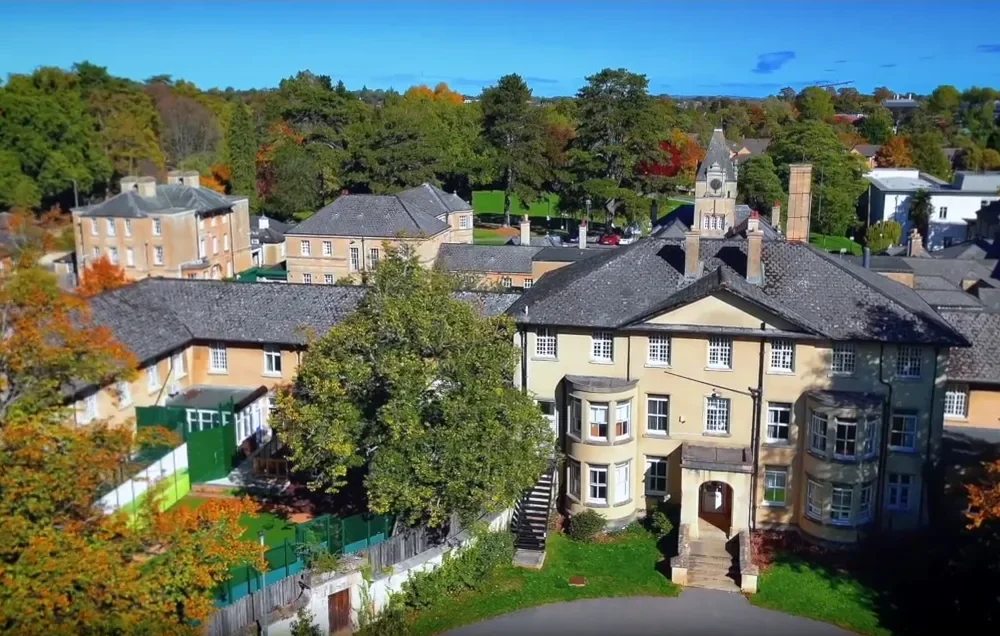
Well, as an environment, it was a modern building, not a particularly beautiful or well-constructed building, I would have thought, and actually has since been, as far as I know, pulled down and is a much smarter and newer building. It wasn’t a locked building, so we couldn’t deal with cases where… the very few cases where you think that young people might have to be locked or in a secure environment. So we didn’t have that. And there were secure Units around the place that they would have to be moved on to. Yes, well, it was… we had, I think… the number of inpatients was about 15, or could it have gone higher than that? There was a largish nursing staff who were related individually to the patients, right… to the teenagers. There was a wonderful school Unit who were brilliant. They were brilliant teachers and they picked up an awful lot of educational problems. And I used to think they were the best thing about the Highfield almost. They were good. And no, the nurses were good too. There was one psychologist, an OT, I think and social worker – me. And I think that was kind of it, really. And of course, the medical staff, which was two consultants. When I went there, it was William Parry-Jones and James McGuinney. Those were the two consultants. William Parry-Jones was in charge of the Unit. And we used to have.. we had… a senior registrar and a junior registrar, doctors on rotation.
Each patient had a family worker, a special nurse, a family worker, and the psychologist was more sort of free ranging. And we would have family meetings once a week with parents and family worker and special nurse working together. So also there will be a case team so they will be the main… the family worker was the kind of sort of IC case team and there was also one of the psychologists or an OT might be attached to that case team and a teacher. So it’s very much a multi-disciplinary approach
And the thing about the Highfield was… I have to explain the approach really. Because family work became more and more important and generally in the sort of the narratives around therapy and especially for children, family therapy became the treatment of choice even in psychiatric crises… of psychiatric difficulties.
On the other hand, it was… because we were… because it was in a medical setting, one had to be tactful. And a lot of the work, which some other family therapists might have looked at from a different angle, a lot of the work was quite practical, quite problem-solving, because that was a way of fitting in with the structure of the Unit.
All patients, unless they were absolutely very, very… say, psychotic, very in need, all went home at weekends. So a lot of the family work could have been or was oriented around practical things like how the weekend went and so on and so forth. And that was a way into finding out what was going on in this family. And yeah, and helping, well, just being quite pragmatic, actually.
So a lot of the work was, as I say, was practical and shifting. The other thing to say about the Highfield was that the main ethos was not in a sense, not psychiatric. Okay, the children had, in quotes ‘psychiatric problems’ in the sense that they all, I suppose, acquired diagnoses. But the main thrust of that Unit was working to diminish the effect of any psychological problem on the growth and maturity of an adolescent. And the main thing was always to keep them moving, to keep them related to the world, not to let them… not to let this interfere with their adolescent development and their lives. So we were constantly pushing them out, making them go back, making them go home for weekends, taking them on trips to school, liaising with school, with all the… with all the… the connections they had in the world just to keep them, keep them engaged. That was the main thrust actually. So, and that’s of course what, well, that was the main thrust certainly of the family work.
Jonathan Leach
And could you describe something about, you know, how was the approach developed and maybe you could say a bit about William-Parry Jones, I don’t know how important he was in that?
Marion Allsop
He was very important, he was a very important… very important head of the Highfield, because he was a sort of very gentlemanly, very charming man and he was quite sort of upper class and I think the referrals from the sort of public school type sector came because he was seen as a kind of a nice kind of acceptable figure, for you know he was a pukka, he was absolutely a pukka psychiatrist so he could deal with the border around the Highfield in relation to the rest of the Warneford
Within that context, he was completely democratic. He never pulled a medical punch. He was clearly in charge and very certainly, you know, he used a medical model in relation to psychotic patients and medication and so on, and that was all clear. But apart from that, it was a completely democratic process. If you were good, he supported you and gave you limited opportunities to do what you thought was right. So, for instance, if you were going to send somebody home for the weekend and you thought there might be trouble, you thought there might be difficulties, you thought they might be running… with their parents, you thought possibly they might run off or whatever, police might be involved, things like that. So you just say to him: ‘I’m sending so-and-so home for the weekend. I think it’s risky’. He said: ‘OK, why are you doing it?’. So you would explain the reason, the positive reason. And he’d say: ‘Right, OK, what shall I tell the coroner?’. So we go through it. And then he’d say: ‘Right, off you go’. Gave you permission. He never fussed… he never hovered anxiously. he just supported you. You just knew he would support you if it all went wrong. He was actually a brilliant manager. I mean, that’s a brilliant manager in any sphere. And he was. And that Unit really needed a brilliant manager because we did live in a risky environment. And that said, we also supported each other a lot because, you know, we could go to bed at night, sort of not knowing what was going to happen the next day.
Jonathan Leach
I don’t know if it’s possible to give an idea of what the inpatients’ timetable looked like for a week, what would be the sort of, I mean, not specifically, but sort of the mix of things that would be on that timetable?
Marion Allsop
Well, the mix would be, I mean, they were expected to go to school, so school days. School days, or if they weren’t at school any longer, because some of the older ones weren’t, then they would be doing sort of educational activities of some sort. And there was always a school outing on a Friday afternoon to some local beauty spot or other, which was quite something to see. And I used to, as the teachers organised that, I used to think they were so brave. They could take some… There were… things happened, there were sort of accidents, but on the whole they were right. Then, of course, there were things like school return programs, because we used to have a steady referral of what we used to call school refusers.
They’d stayed away and got more and more anxious and more and more close to their parents. And quite often, there was huge family problems, which meant they didn’t want to leave. They were at home to look after their parents, really. So… and a lot of that was almost, you know, not stated, and so on, but just there. So a lot of them… that was getting parents to take them to school. And that was a really hard task for them. But it made a difference. It changed families. But we supported them.