Oral History 1
Summary by Julia Buchanan
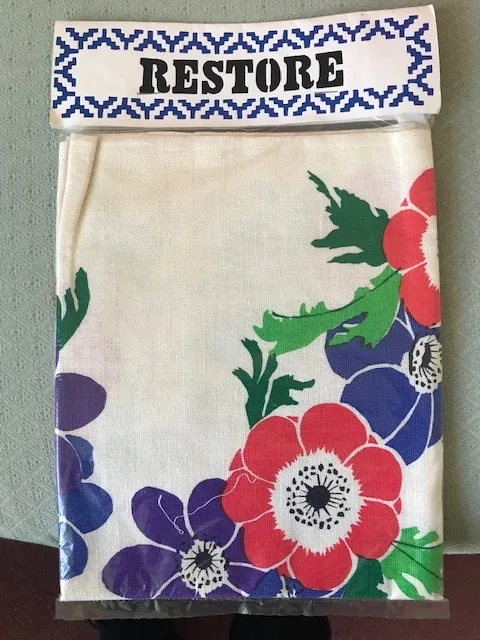
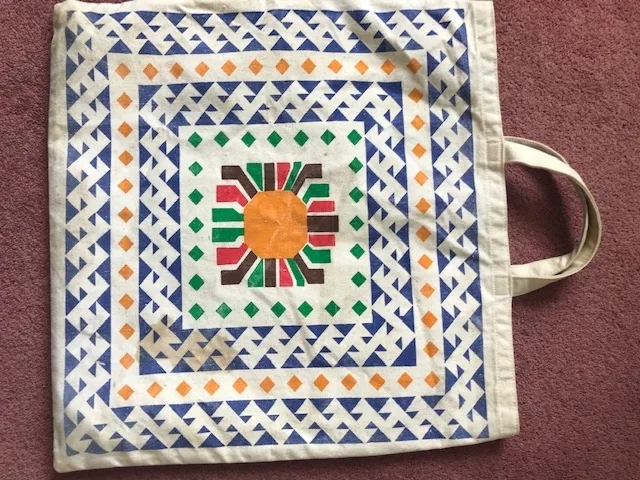
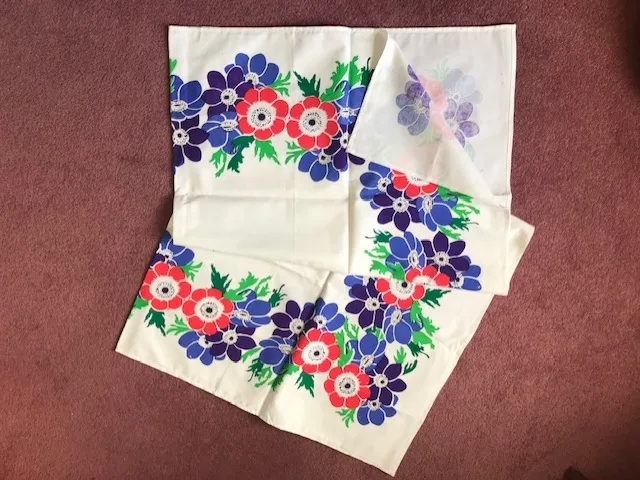
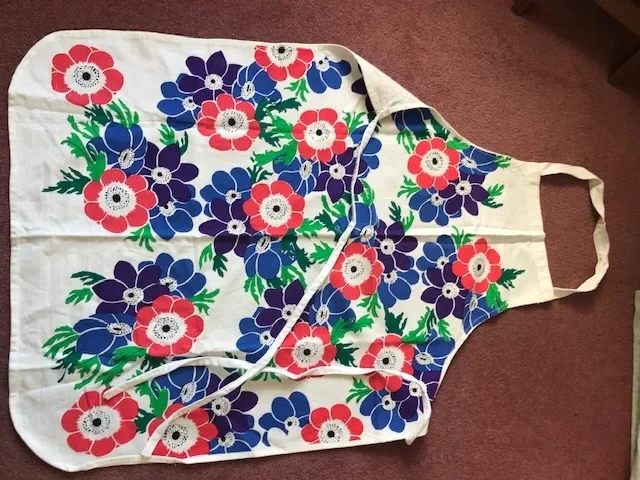
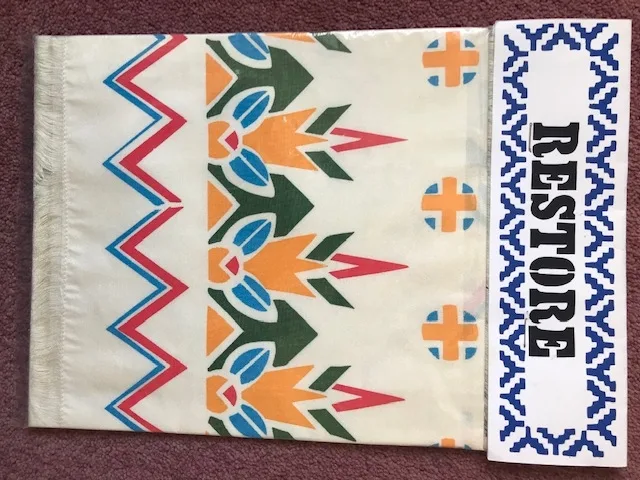
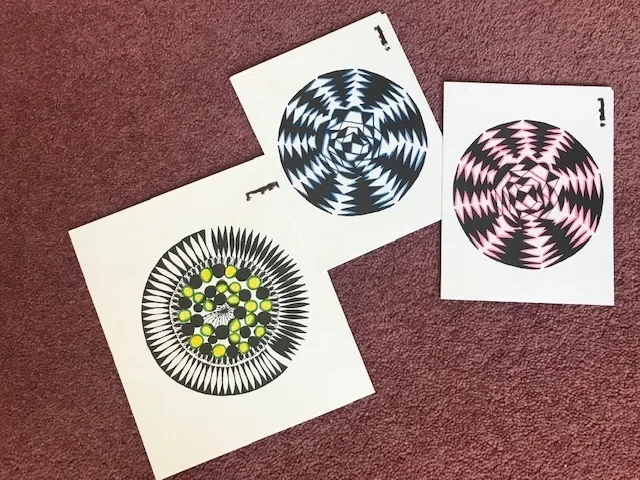
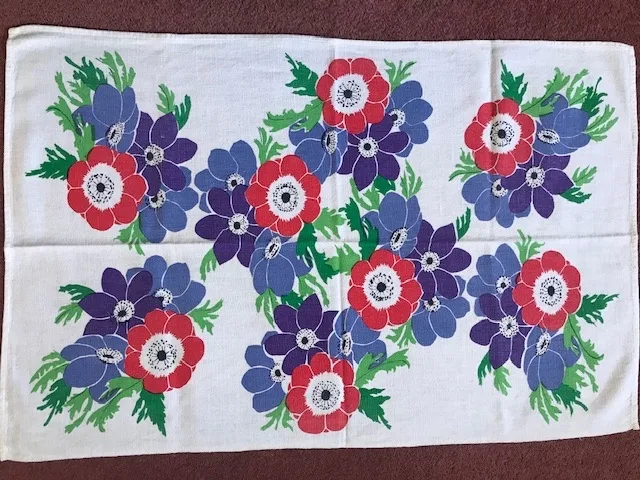
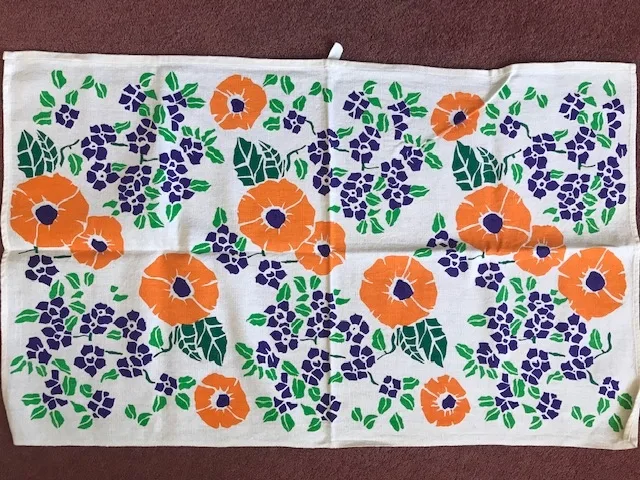
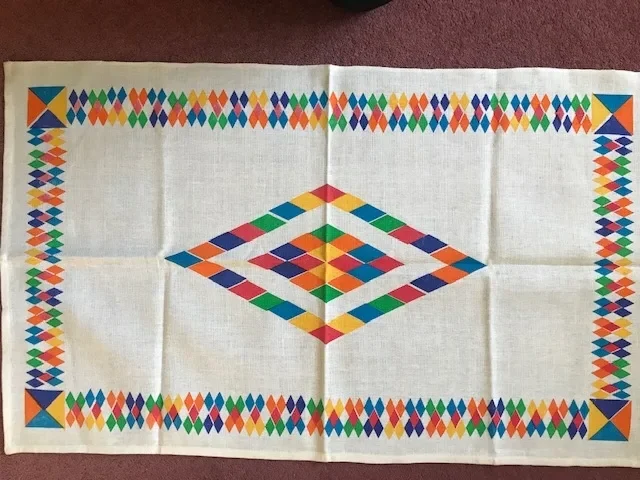
Printed textiles and cards were produced using silk screen printing at the Warneford Hospital in the years around 1980. Items included tea towels, tablecloths, oven gloves, aprons, scarves and greetings card. Here you can see photographs of typical items.
This collection of items was given to Mr. Roy Overall by the screen printing group as a “thank you” for accommodating them at St. Gabriel’s House in Hill Top Road between 1979 and 1981. Roy was one of the first Community Psychiatric Nurses at the Warneford. He led a project to convert St. Gabriel’s House, which was located at the edge of the Warneford site, from temporary accommodation for visiting doctors to new use for out-patient consultations and living space for people with long-term mental illness who were then being moved out of the in-patient wards.
The screen printing group had moved from Littlemore Hospital to the Warneford Hospital Occupational Therapy Department, but they needed more space than was available for their equipment, and to peg up the printed items to dry. Roy was able to give them use of 3 large downstairs rooms at St. Gabriel’s, which they used until they moved to the Cowley Road Hospital site in 1981 to join the wood-working group, as part of the organisation called Restore (Rehabilitation Services Trust for Oxfordshire Re-employment, founded in 1977). The third activity at Restore was gardening. Restore’s products were sold to the public from the shop at Station Lodge at Littlemore Hospital.
Screen printing was a more rewarding work activity for people with long-term mental illness than the repetitive tasks traditionally done in earlier sheltered workshops. It was a craft activity which produced attractive and saleable products. The printing process comprised a number of straightforward steps which together created a useful and pleasing object. Sarah Platt brought craft experience with her when she joined Restore as a volunteer in 1978. She then became the second Director of Restore in 1980. Her vision was that people with long-term mental illness working in Restore could experience job satisfaction, self-respect and a valuable social identity through their work as a “grower” or a “maker.” In a written account of her experience with Restore, Sarah Platt wrote,
“The ability to work on a product as a member of a team has become an important factor in Restore’s work groups. The care and accuracy with which an individual manages his or her task visibly affects the end result for the whole group and encourages a responsibility towards the project and others which is frequently acknowledged by signing a name to a particular piece of work.”
Sources
Overall R (2025) Oral history interview
Leach J, Agulnik P, Armstrong N (2023) “The development of a creative work rehabilitation organisation” The History of Psychiatry 34 (1 )48-63
Platt S (1983) Restore: unpublished written account