Audio Guide
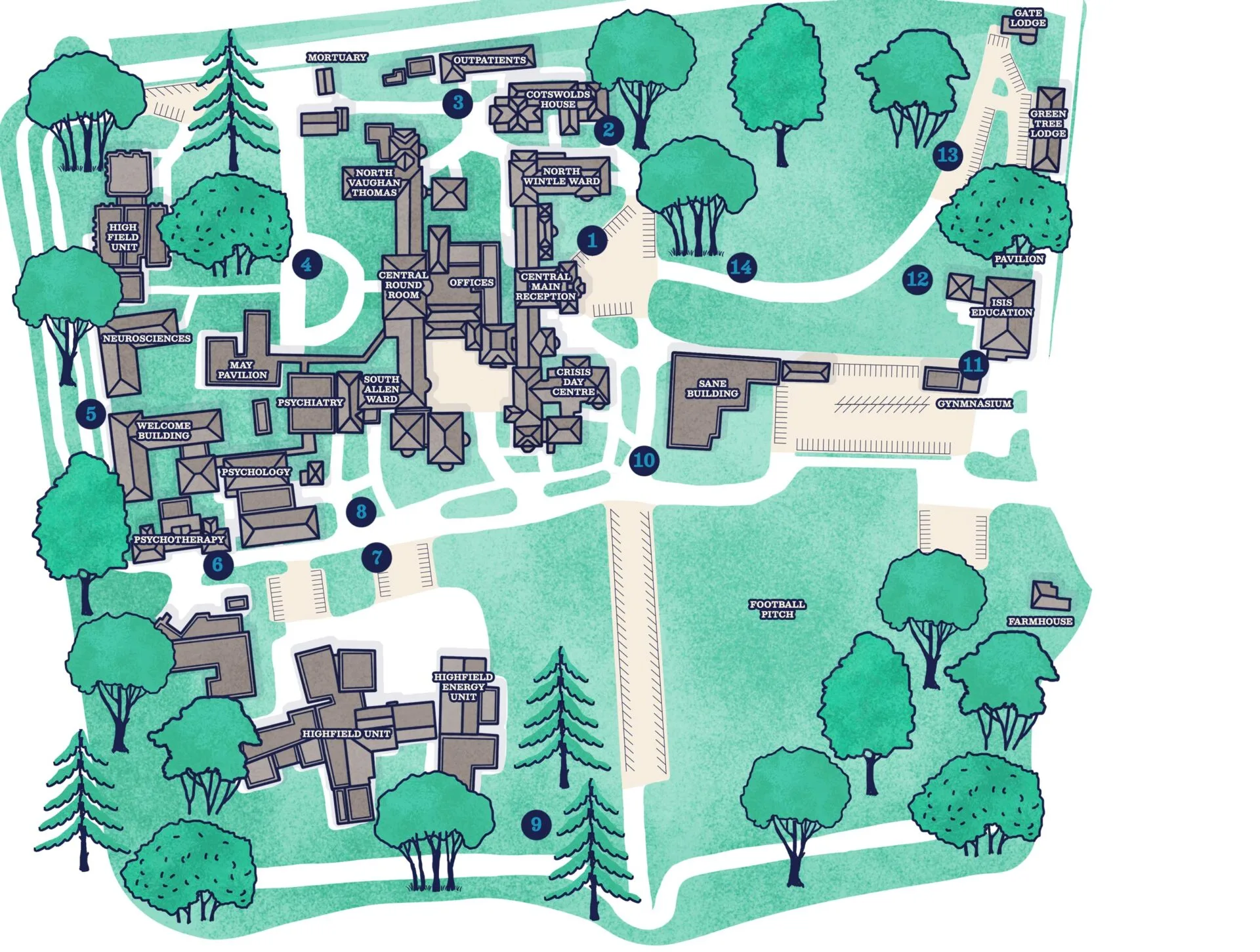
10. Original site of the Ladies’ Ornamental Garden
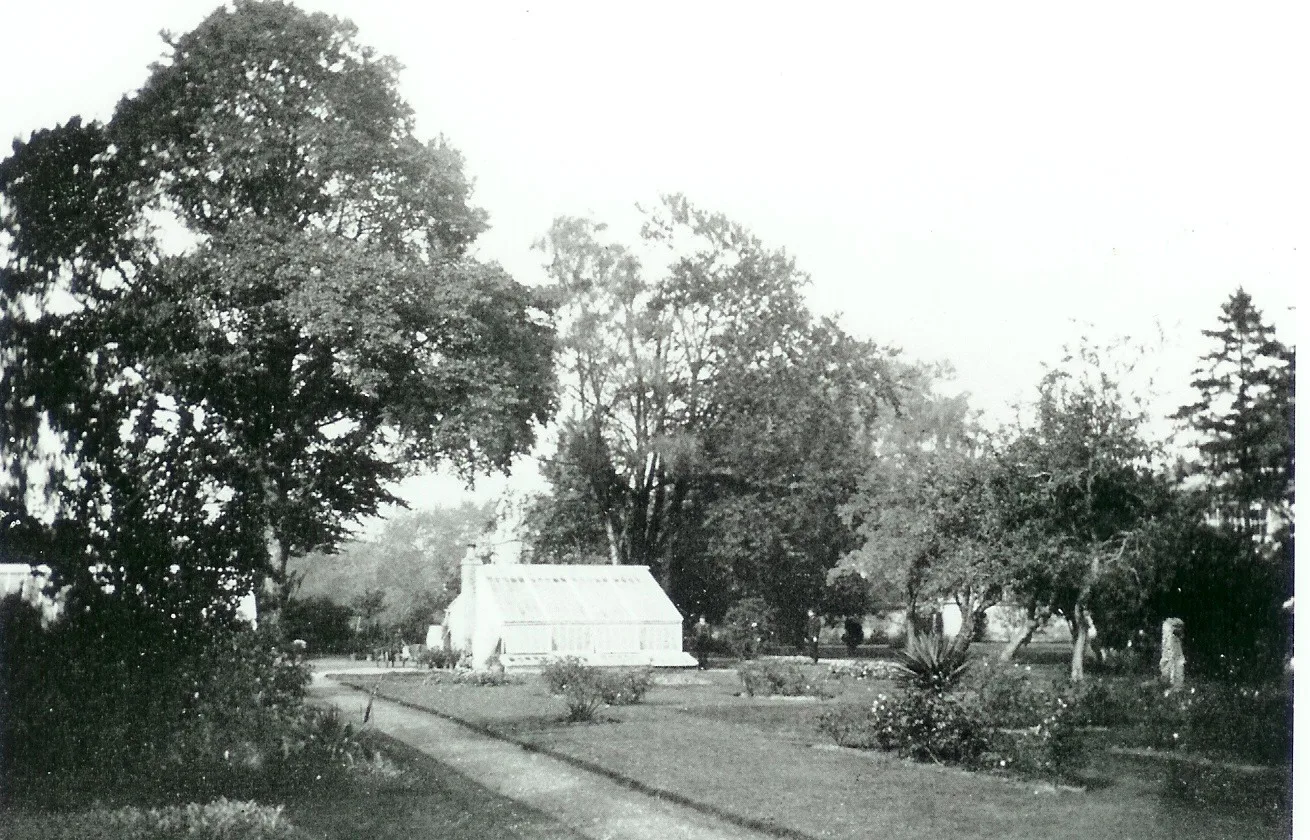
Opposite the Chapel is the location of one quadrant of the original ornamental garden. The mastermind behind the development of the Warneford grounds and gardens was the Rev. Vaughan Thomas, who was chair of the Warneford Management Committee for over 30 years. Working alongside the asylum’s architect, Richard Ingleman, Thomas engaged in extensive correspondence with medical superintendents of established asylums and other experts to optimise the Warneford’s outdoor spaces, according to the principles of moral treatment. These principles, developed at the Quaker-run ‘Retreat’ at York, became the most influential model for the management of nineteenth-century asylums, and influenced the design of both buildings and grounds.
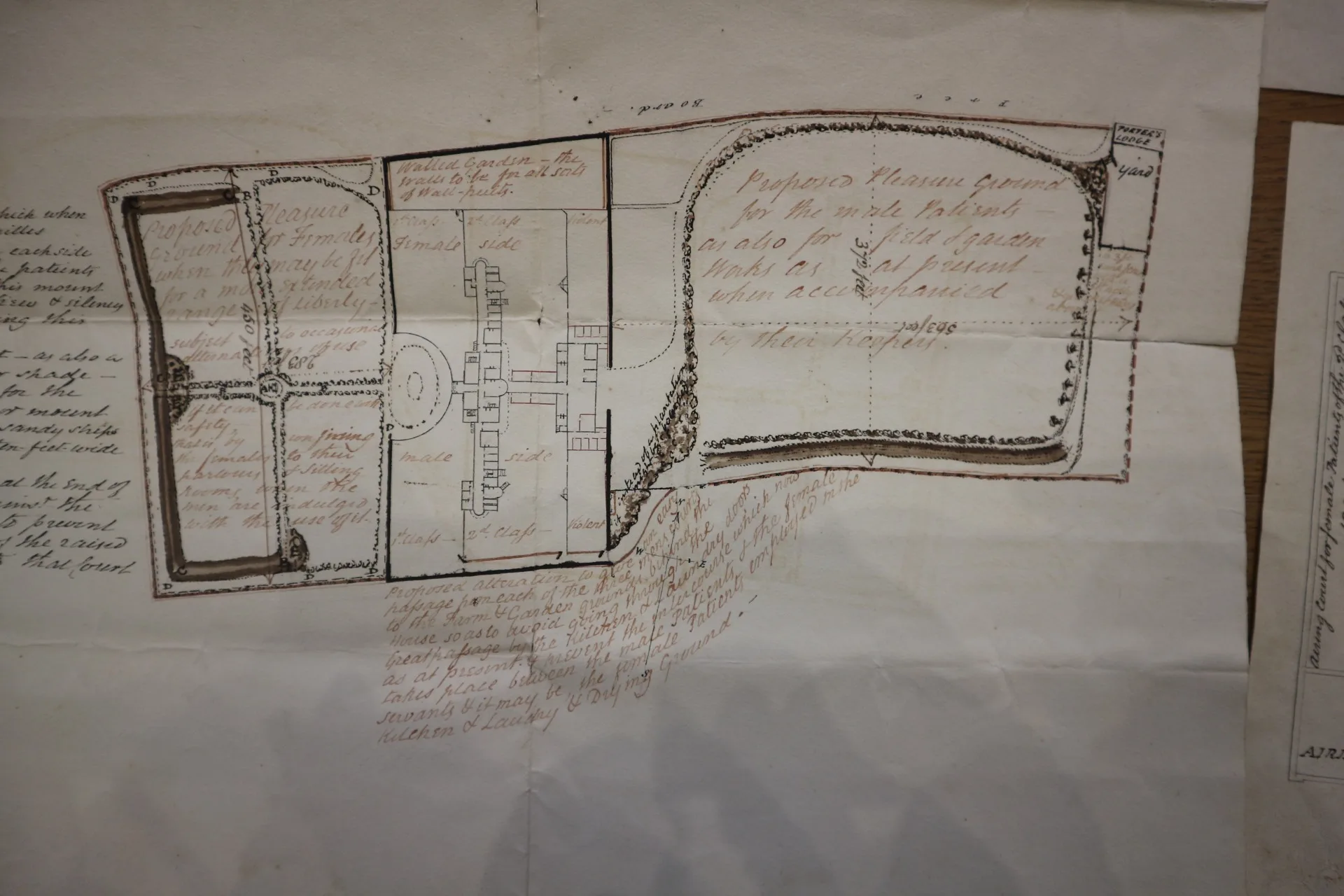
Asylum gardens were important therapeutic spaces where patients took exercise, relaxed, worked and socialised. Featuring an ornamental lay-out, with lawns, paths, and borders in the country-house style, there were separate gardens for men and women. The boundaries were either fenced, walled or hedged and the gardens decorated with statues and urns.
The space is now where patients engage in horticultural therapy, using the polytunnel for planting and cultivation.
11. The former front of the hospital
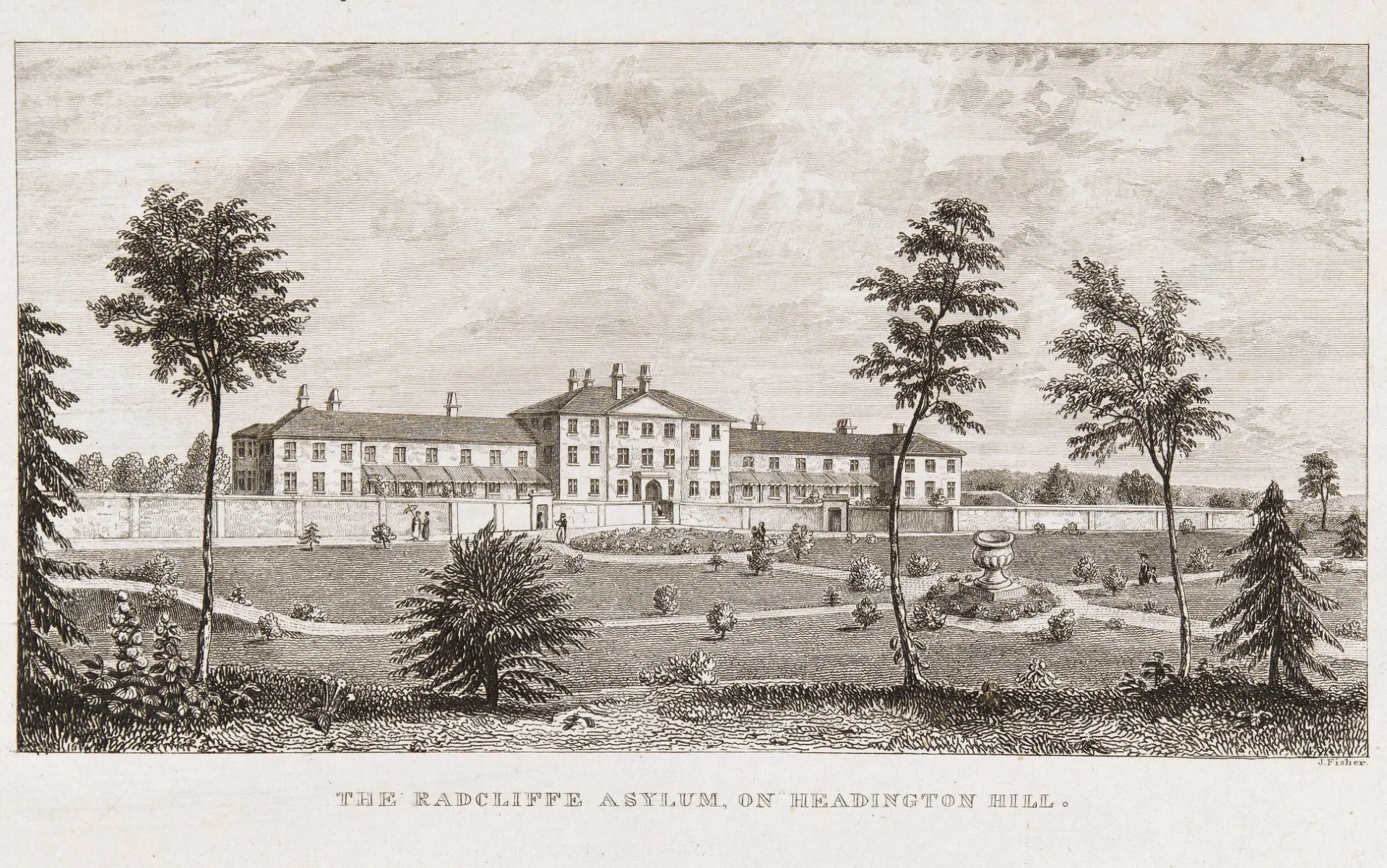
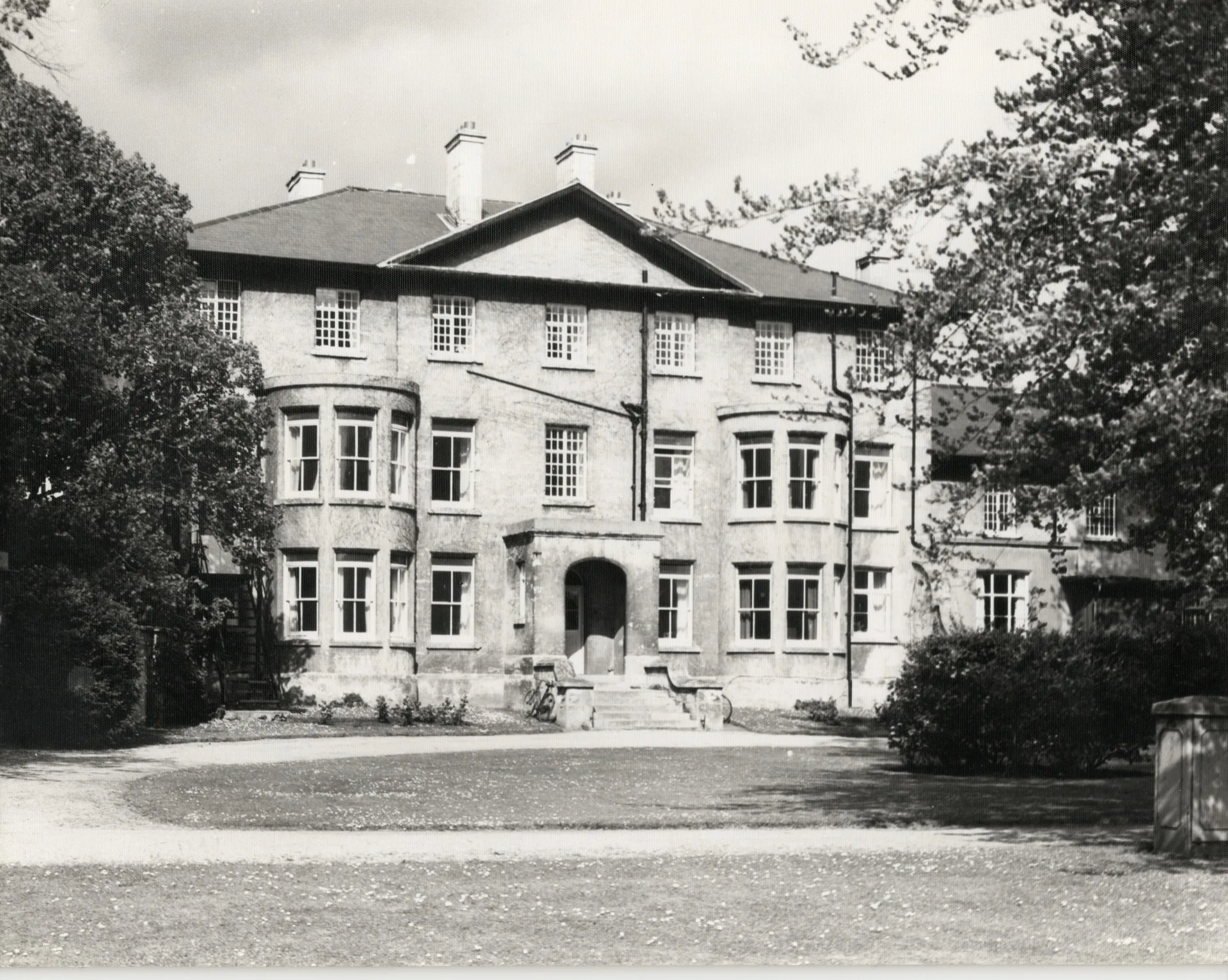
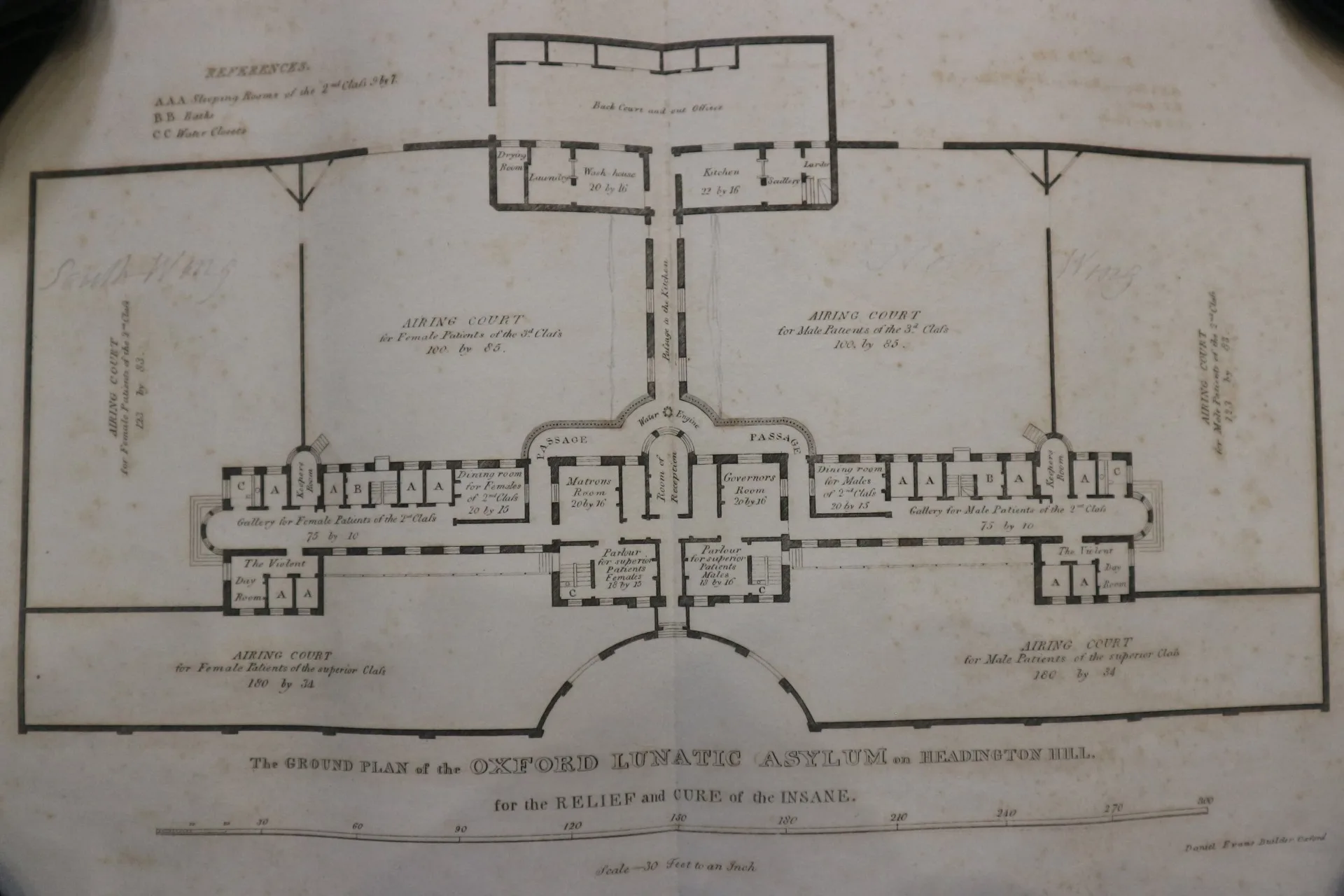
This was the entrance, with its half-moon of lawn in front, used between 1826 and 1877. Architect Richard Ingleman (1777-1838) designed the original building with this entrance. The other two asylums designed by Ingleman (in Nottingham and Lincoln) had a similar layout, based on the “corridor plan” according to which a central administration block was flanked by two wings, allowing for the segregation of patients into male and female wings. The three-storey central block was occupied by staff and the “superior” patients, while the ground floor and first floor wings were for the second- and third-class patients respectively. The superior patients had their own sitting rooms overlooking the gardens. The wings were designed to allow as much natural light as possible into the rooms and galleries, and to provide views of the countryside.
The Warneford was constructed in Headington stone, Westmorland slate and Haytor granite by local builder, Daniel Evans, after the work was put out to tender in 1821. The foundation stone was laid on 27 August 1821 by Reverend Dr Edward Legge, Bishop of Oxford.
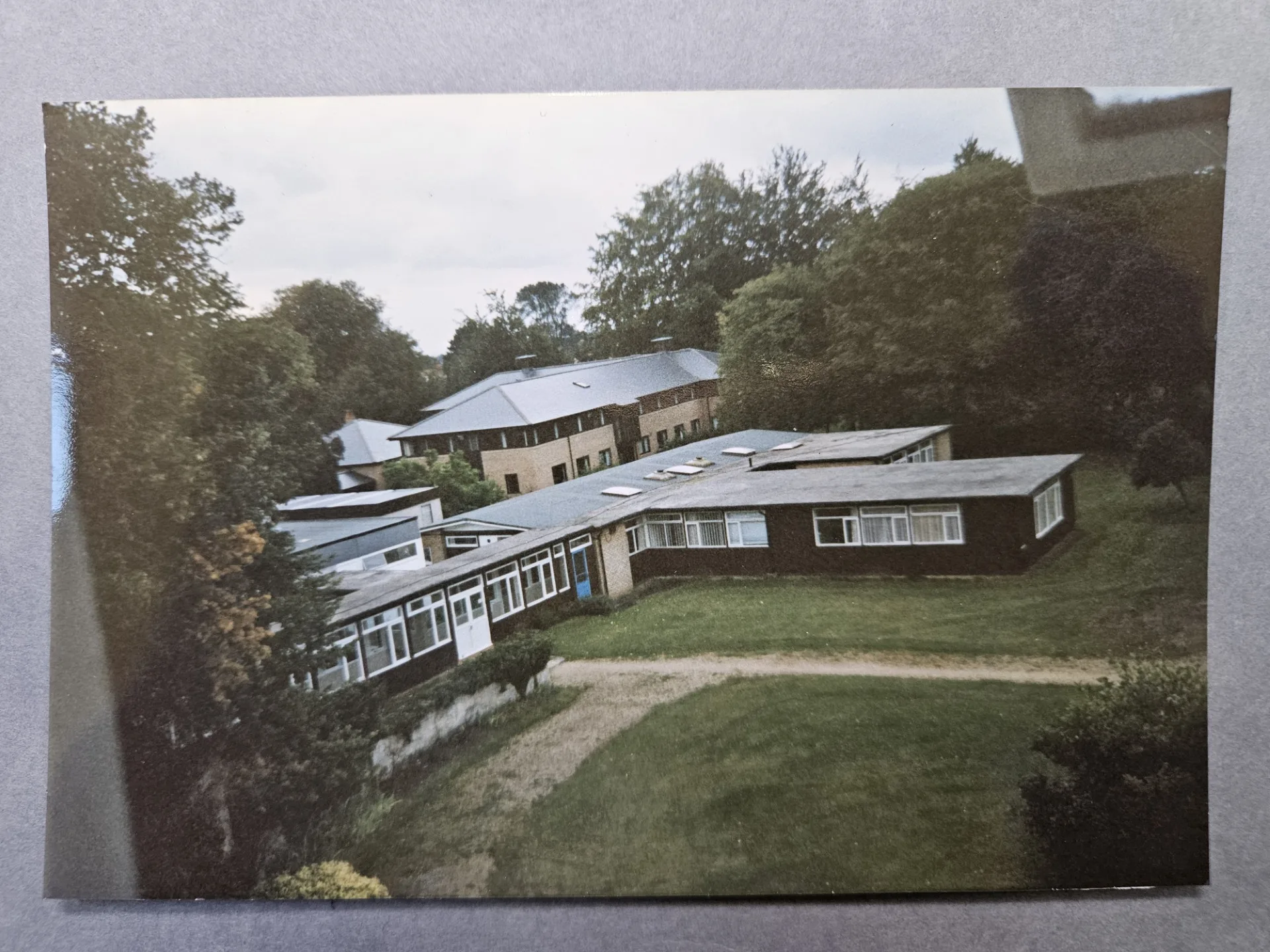
12. The May Davidson Building
The May Davidson Building, named after the eminent clinical psychologist, was constructed in 1968, and was originally designed as an Insulin Coma Therapy Unit (ICT was a form of therapy that has since been discontinued). The building was first used as an adolescent unit, which moved in 1971 to the first Highfield Unit (now closed and behind hoardings). It was then used as a research building by Oxford University’s Dept. of Psychiatry, and then as the base of the hospital’s clinical psychology service.
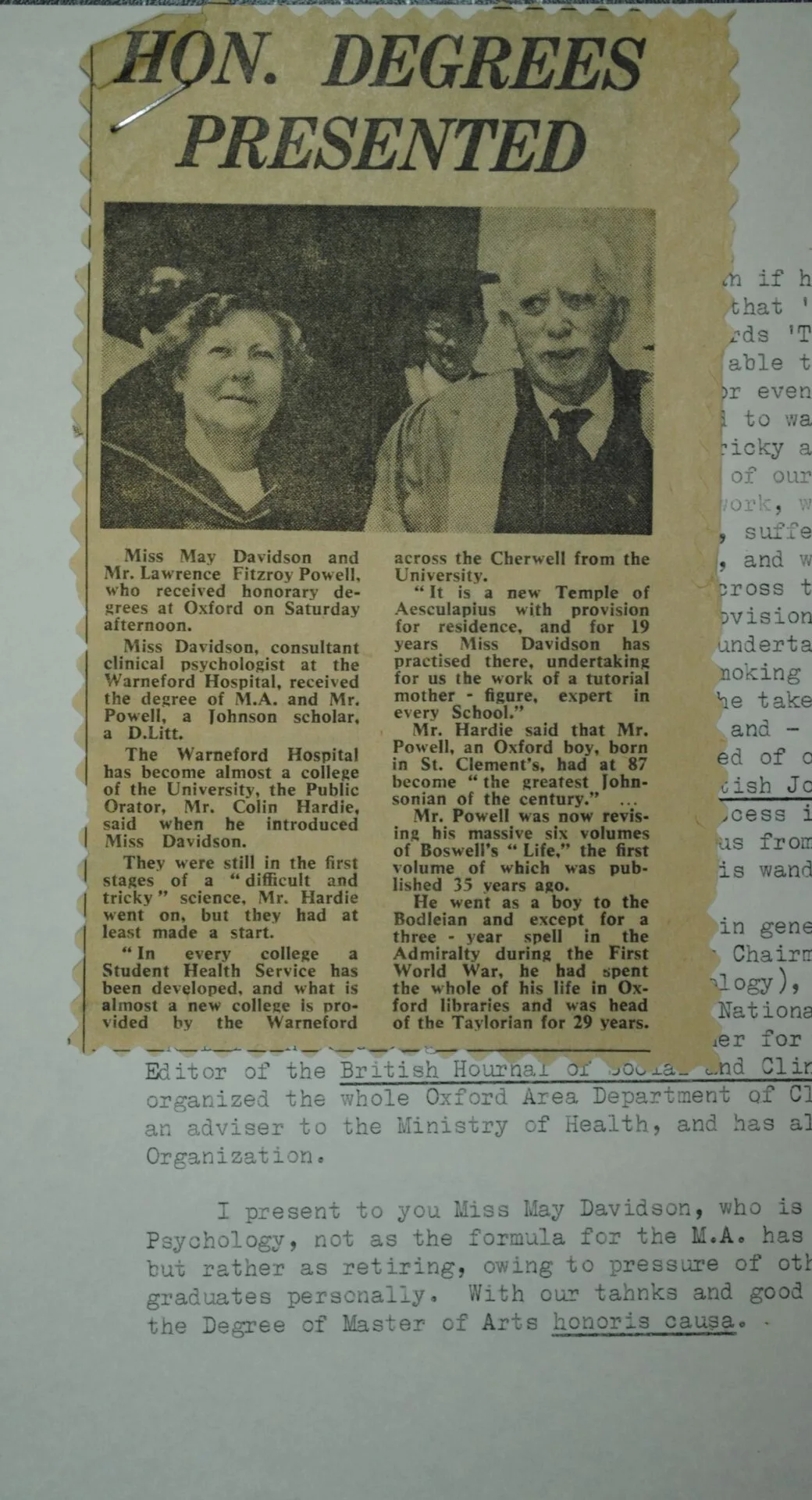
May Alison Davidson, CBE (1914-1982) was appointed Consultant Psychologist at Warneford Hospital in 1950 and remained here until her retirement in 1980. During Davidson’s time in Oxford, she developed psychological services at both regional and national levels. Davidson was the first official advisor to the Department of Health and Social Security on professional matters relating to psychology, and was President of the British Psychological Society 1976-1977.
In collaboration with psychiatrist Seymour Spencer, Davidson began one the earliest inpatient interventions for university students, arranging for the steady stream of Oxford students who entered the Warneford to study and take their exams within the hospital. Davidson was awarded an honorary MA by Oxford University in recognition of her work to support students.
Image: May D. receiving her honorary MA [when/date?]