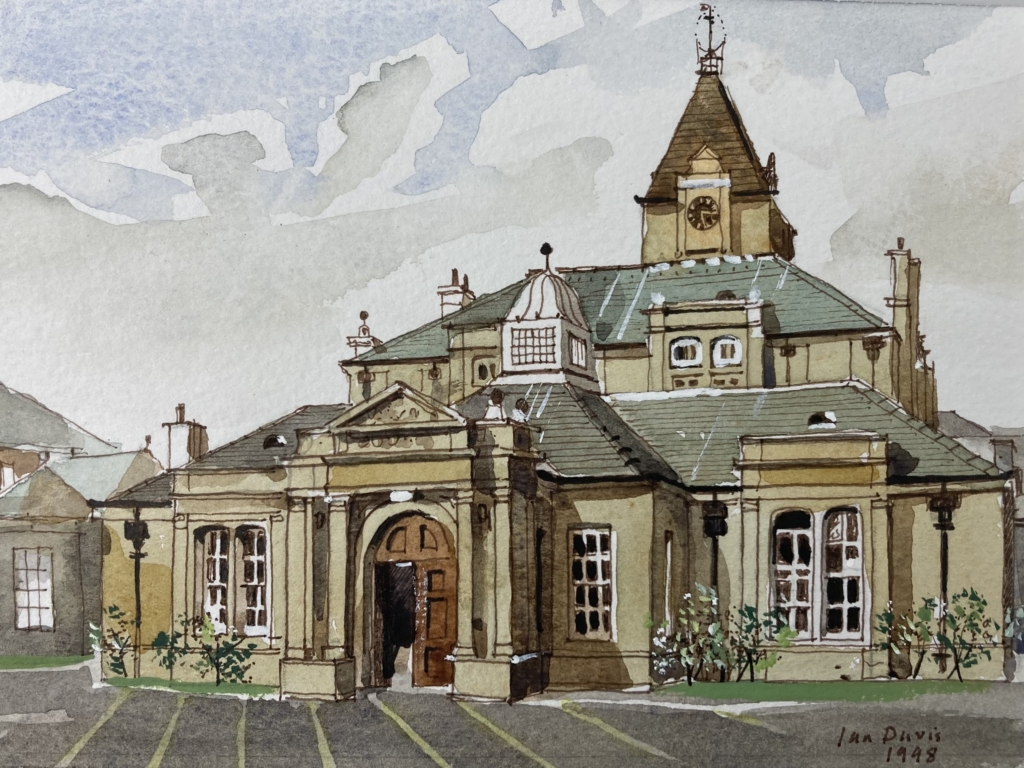
The Warneford 200 exhibition at the Museum of Oxford opened yesterday to mark 200 years of mental health care at the Warneford Hospital. It is the culmination of 20 months of research and planning, and the beginning of a year-long programme of events.
The Warneford 200 project began in early 2024 when Oxford Health NHS Foundation Trust’s Chief Medical Officer, Karl Marlowe, and historians John Hall and Sally Frampton met to consider what could be done to mark the upcoming bicentennial. An exhibition, a play, a film, a lecture series, a programme for schools, a therapy garden, creative workshops…all were discussed.
But who could take the ideas forward? As a historian of psychiatry, and a former events and fundraising manager, I was well-qualified to lead the project through its developmental stages. Starting in March 2024, I began by gathering a Steering Committee of experts to advise on the project. The members of this committee have been very supportive in guiding us through us through the many challenges.
How to pay for the project was one such challenge. Fortunately, our bid to the National Lottery Heritage Fund was successful and their grant of £156,000, together with a series of other donations, have enabled the project to go ahead.
Delivery of the project was another challenge – in addition to Oxford Health Charity, working with partners has helped. The History of Science Museum are curating the exhibitions and providing invaluable advice on public engagement. We are very grateful to the Museum for gifting us the services of curators JC Niala and Tina Eyre who have given great support. The Oxfordshire Health Archives have been enormously helpful in accessing previously uncatalogued documents and directing our research. Researchers from Oxford University’s Community History Hub have helped us unearth precious stories from the archives, while Oxford Brookes have lent us meeting rooms and other resources.
We have been working with the Oxfordshire Recovery College and Oxfordshire Mind to ensure that the voices of experts by experience are heard. We are committed to involving users of mental health services in the design of the project. A team of service-users from Oxfordshire Mind have been examining patient case studies from the nineteenth century and sharing their perspectives on the experiences of patients from the past.
Conducting the research for the exhibition and other events has taken us on a fascinating journey into the Warneford archives. Through these records, we’ve met some extraordinary people, and we’ve come across poignant and moving stories of both patients and the people who cared for them.
Some things have surprised us, such as the longevity of certain forms of treatment. Being active and spending time in nature, for example, was considered just as important to our mental wellbeing 200 years ago as it is today. When the Warneford was first designed in the 1820s, great care was taken to make the gardens and grounds attractive and inviting. Many of the trees that were planted 200 years ago are still here!
We’ve seen how the language around mental illness has changed. During the nineteenth century, people suffering from mental health challenges were referred to as “lunatics” or “insane” and the institutions where they were cared for as “madhouses” or “lunatic asylums”. It wasn’t until the early twentieth century that the word “psychiatry” came into use.
The growth of mental health services over the 200 years has also been striking – in the early nineteenth century the Warneford was the only place in the county offering specialist care for the mentally ill, whereas now it is part of a dynamic network of services serving the Oxfordshire community. But the amazing thing about the Warneford is that the original building is still in clinical use, 200 years after it first opened its doors.
The historic appearance of the Warneford tends to belie the incredible research work that is going on within its walls. Recently I was treated to a tour of the Warneford’s laboratories, where I witnessed scientists using state of the art equipment to research the latest treatments.
I hope the above has piqued your interest and that you are inspired to visit the Warneford 200 exhibition at the Museum of Oxford. Here you will discover the unique history of a resilient institution dedicated to helping those suffering from mental health challenges for the past 200 years.

