Warneford and its people
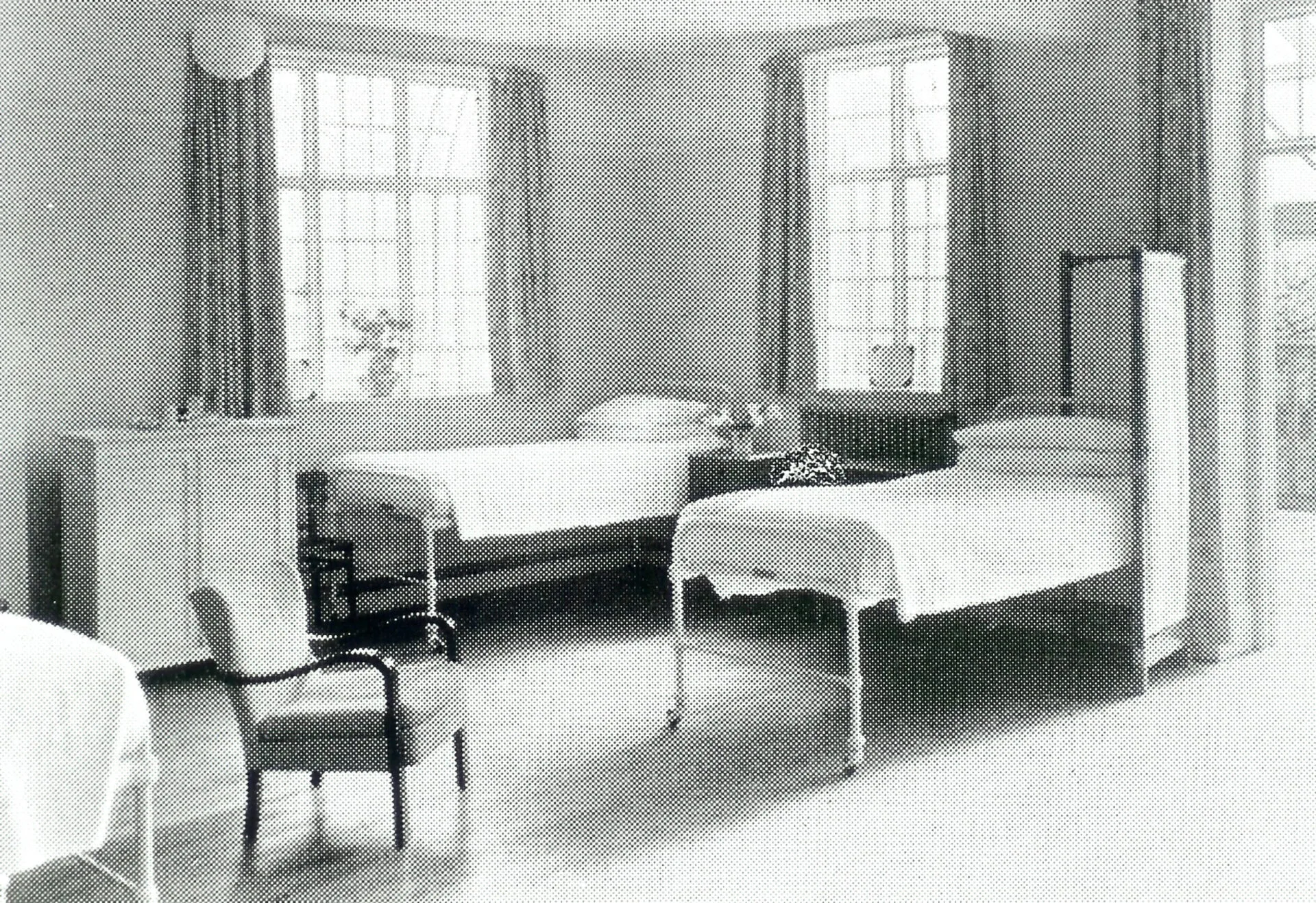
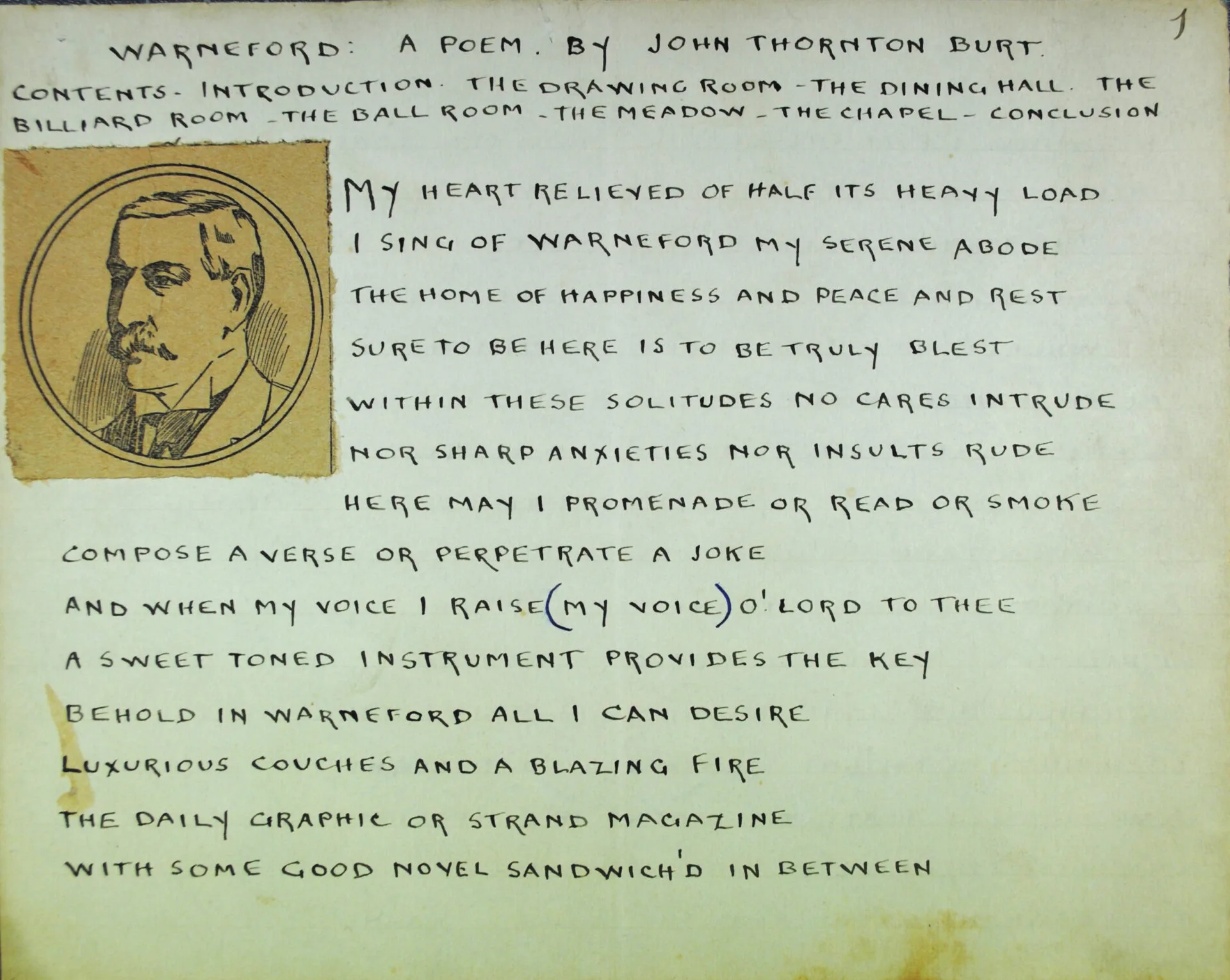
“The general atmosphere was of one big happy family, and the hospital seemed like a country house.” (Memory of an undergraduate patient in the 1960s)
The most important people in any hospital are the people being cared for and treated there. From the earliest days of the hospital the voices of patients and their families can be read in the records, as letters written by them, and in their words recorded in case notes.
But most of the early histories of psychiatric hospitals were written by doctors, who put forward only their own view of mental illness. Historians began to take more interest in the history of mental illness about 50 years ago, but only in the past twenty years or so have the voices of service users, and their families, become more prominent in historical studies.
The needs and views of service-users are now taken into account at every stage: throughout their care, in the training of new professionals, in the design of research studies, and in the planning of new services.
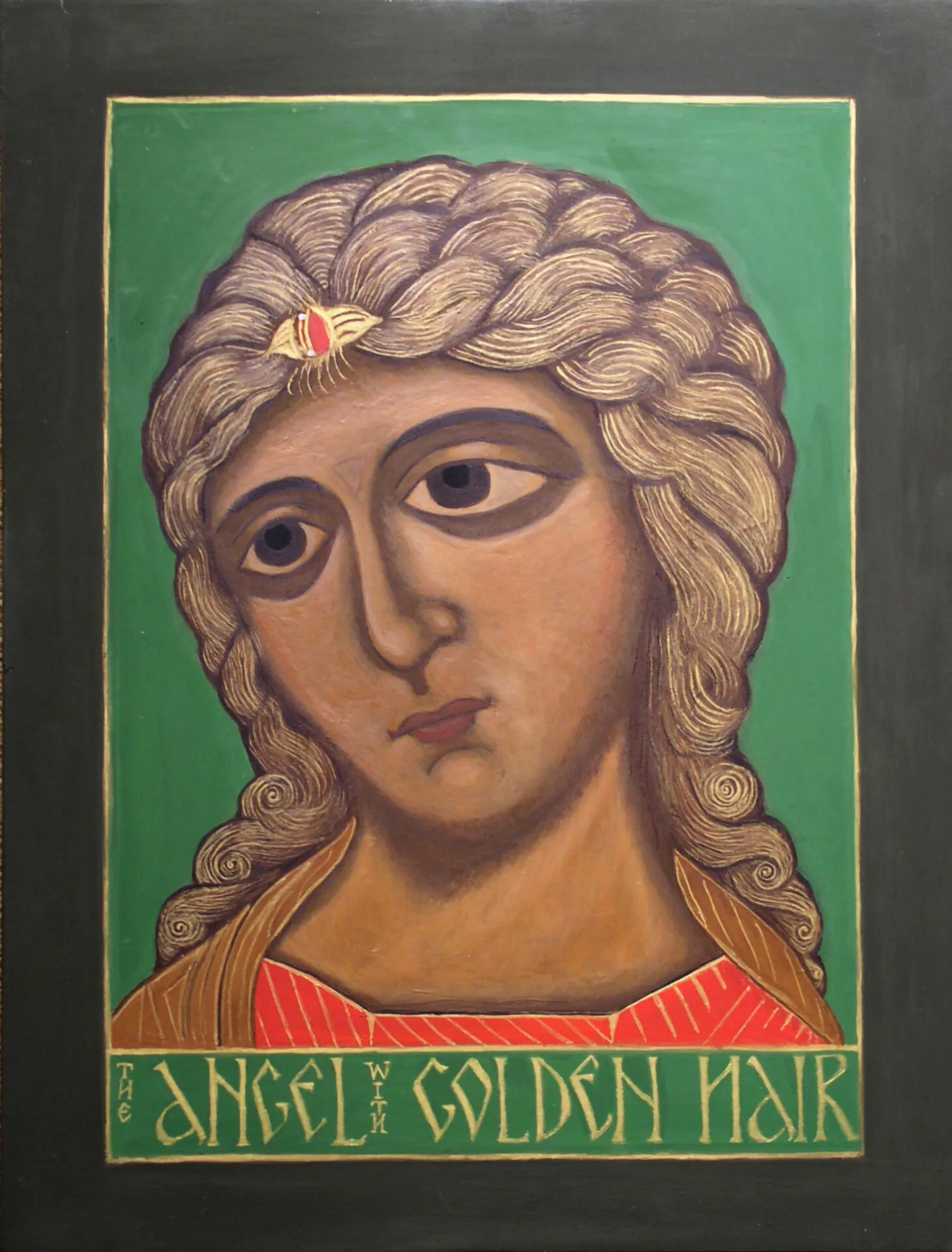
Talking with them, enabling them to express their concerns and views in art, music, drama and poetry, and recording their memories – oral history – enriches the ways in which we both understand the past, face the present, and prepare for the future.
“Friends of patients when corresponding may omit the word ‘Asylum’, and address THE WARNEFORD, OXFORD” (Warneford Asylum Prospectus, 1901)
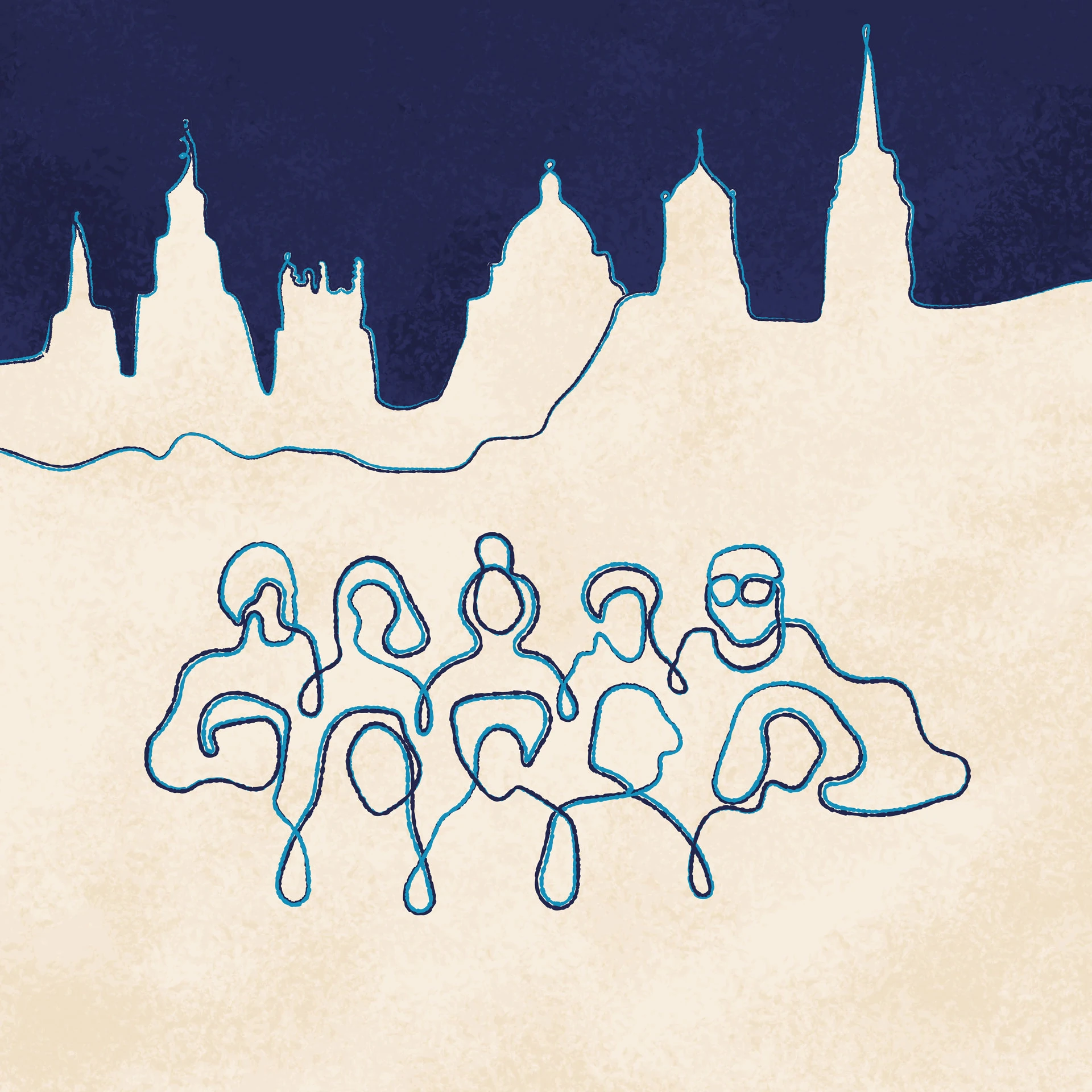
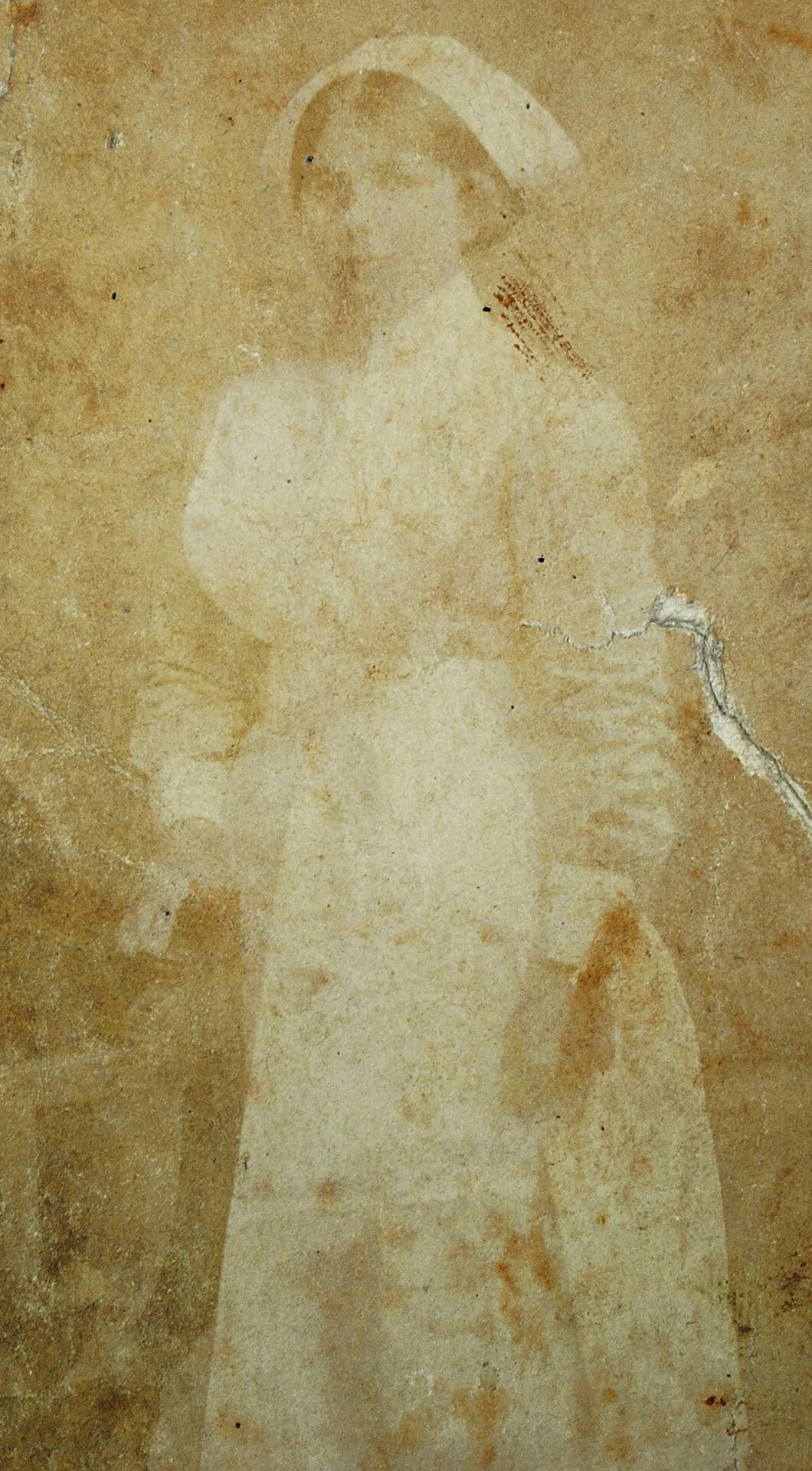
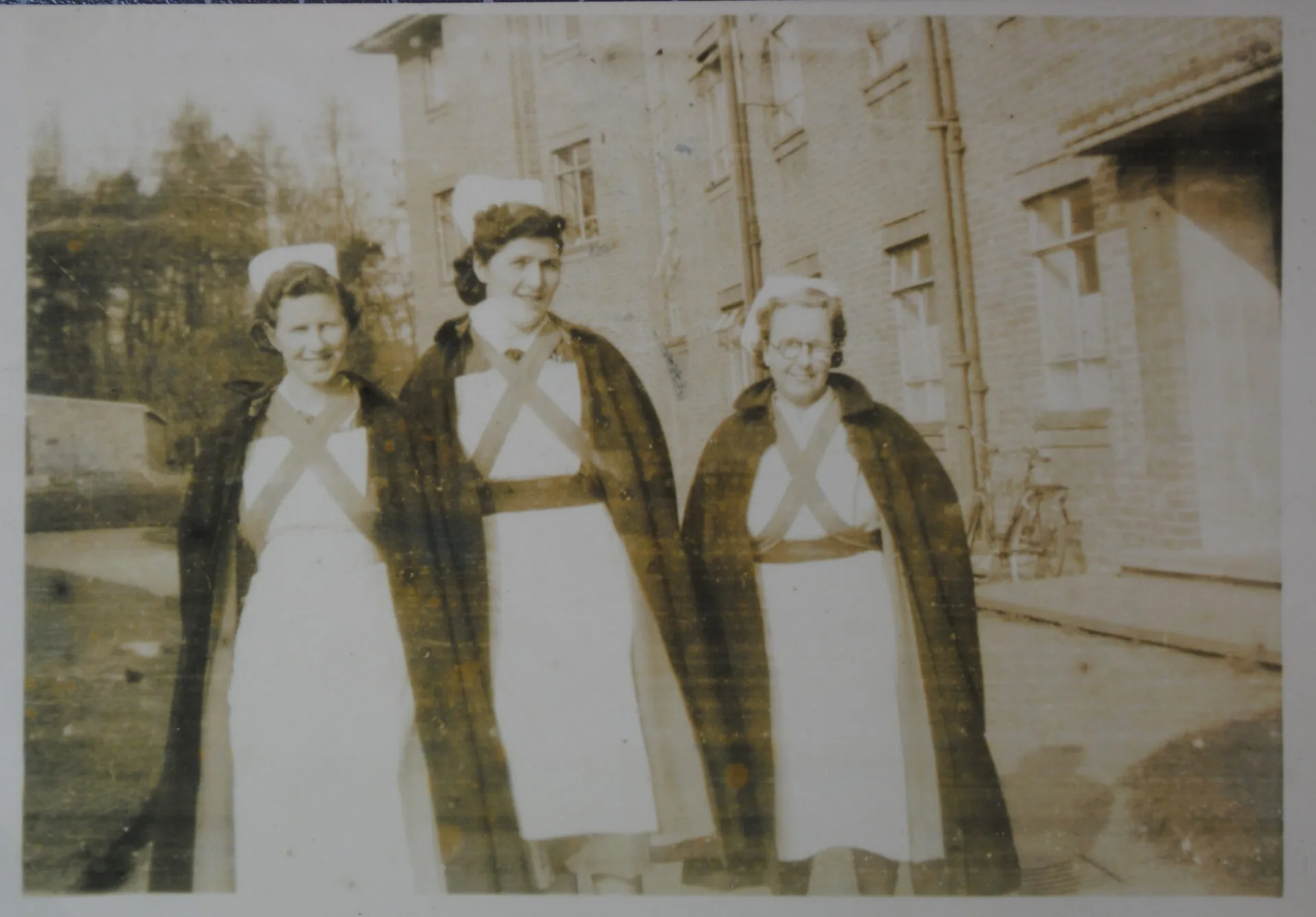
Looking after the patients
“Doctors, nurses, and the often unseen teams who kept the Warneford running.”
In the early nineteenth century, small asylums like the Radcliffe Asylum were often run by a superintendent who did not need medical training.
From 1828 to 1872, however, the hospital was managed by two different couples in which the husband was medically trained and the wife served as matron. They were supported by a few attendants, along with visiting physicians and surgeons.
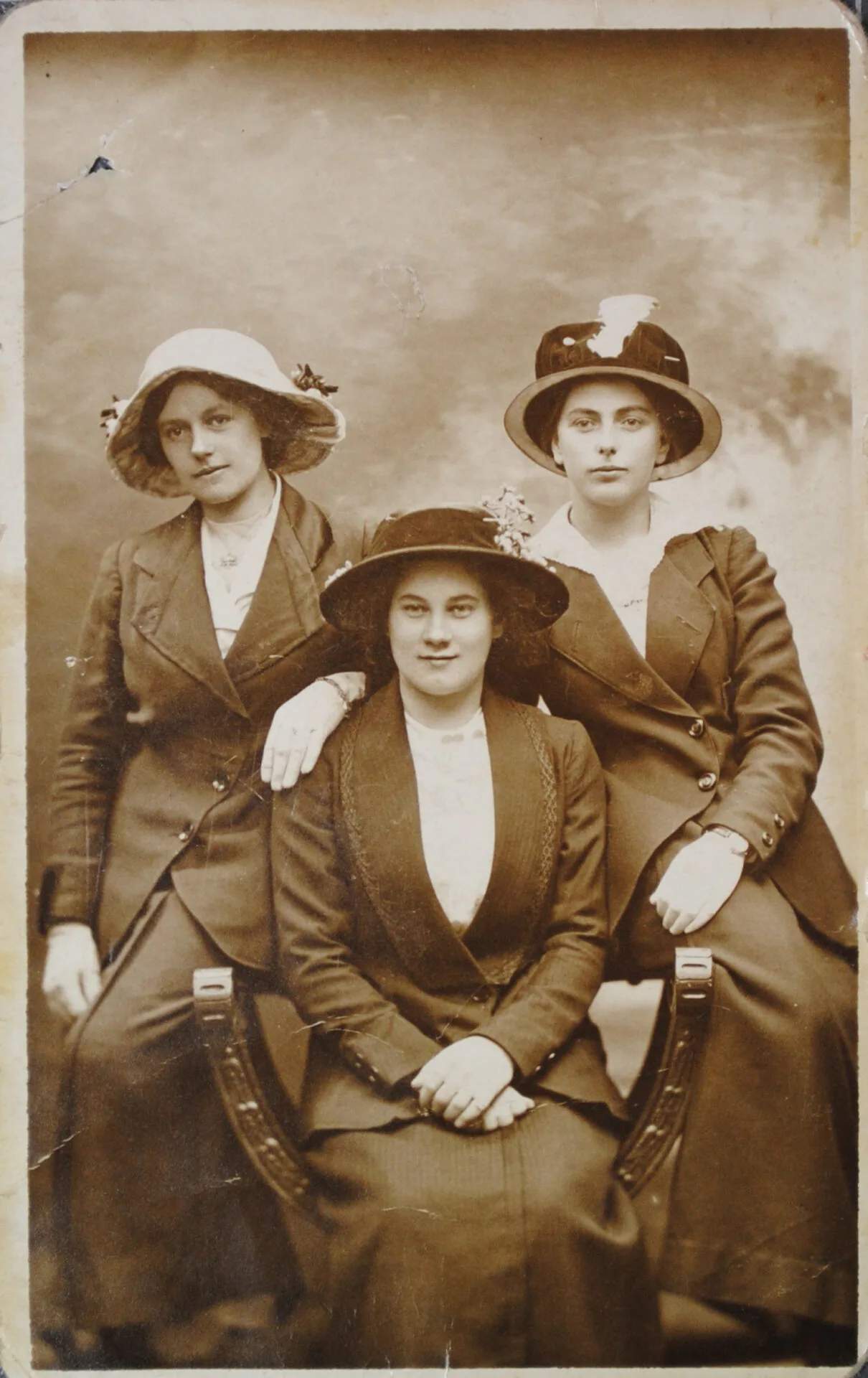
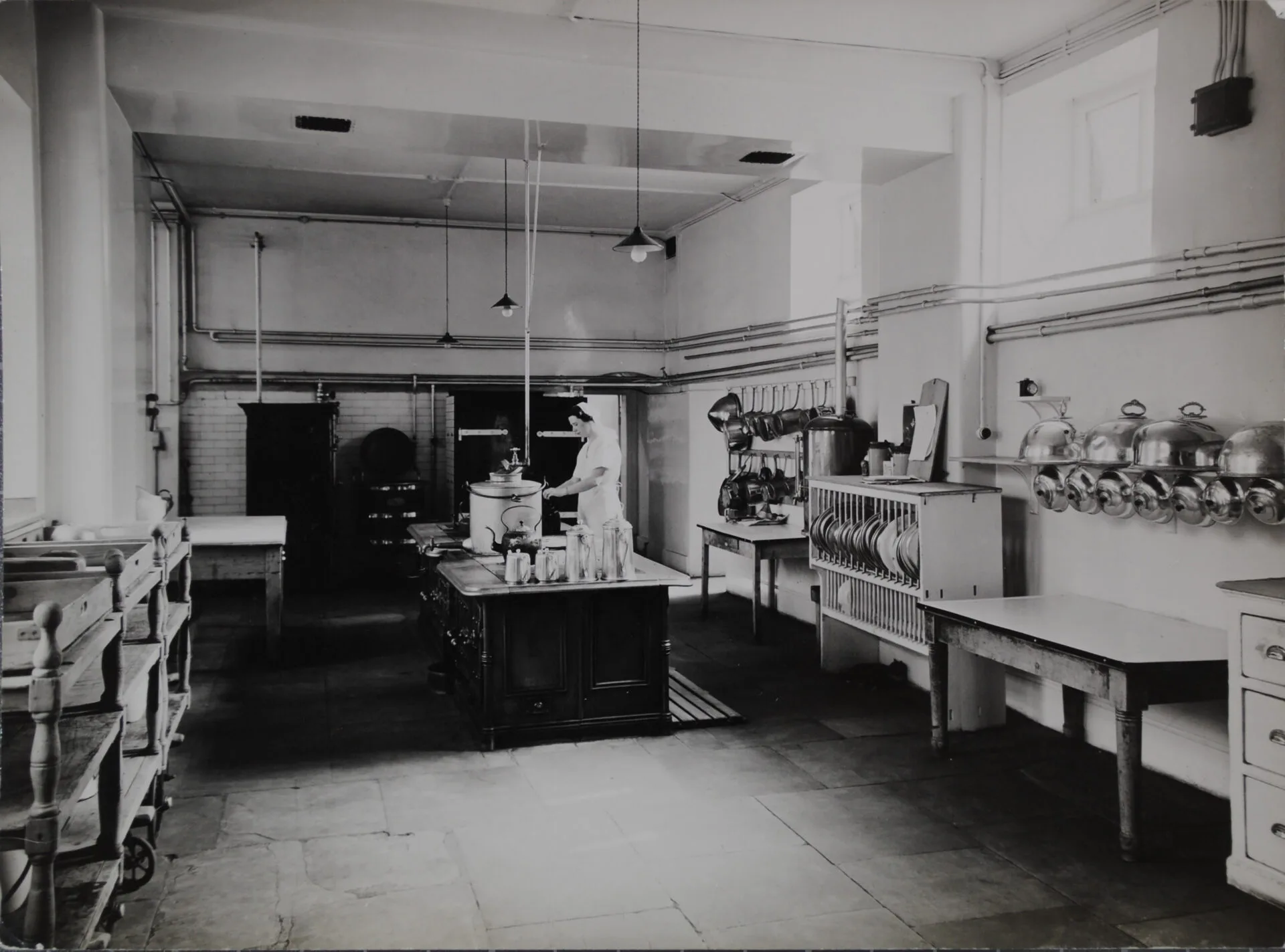
Support staff, such as cooks and gardeners, also had frequent contact with patients.
This basic pattern continued until the hospital entered the NHS.
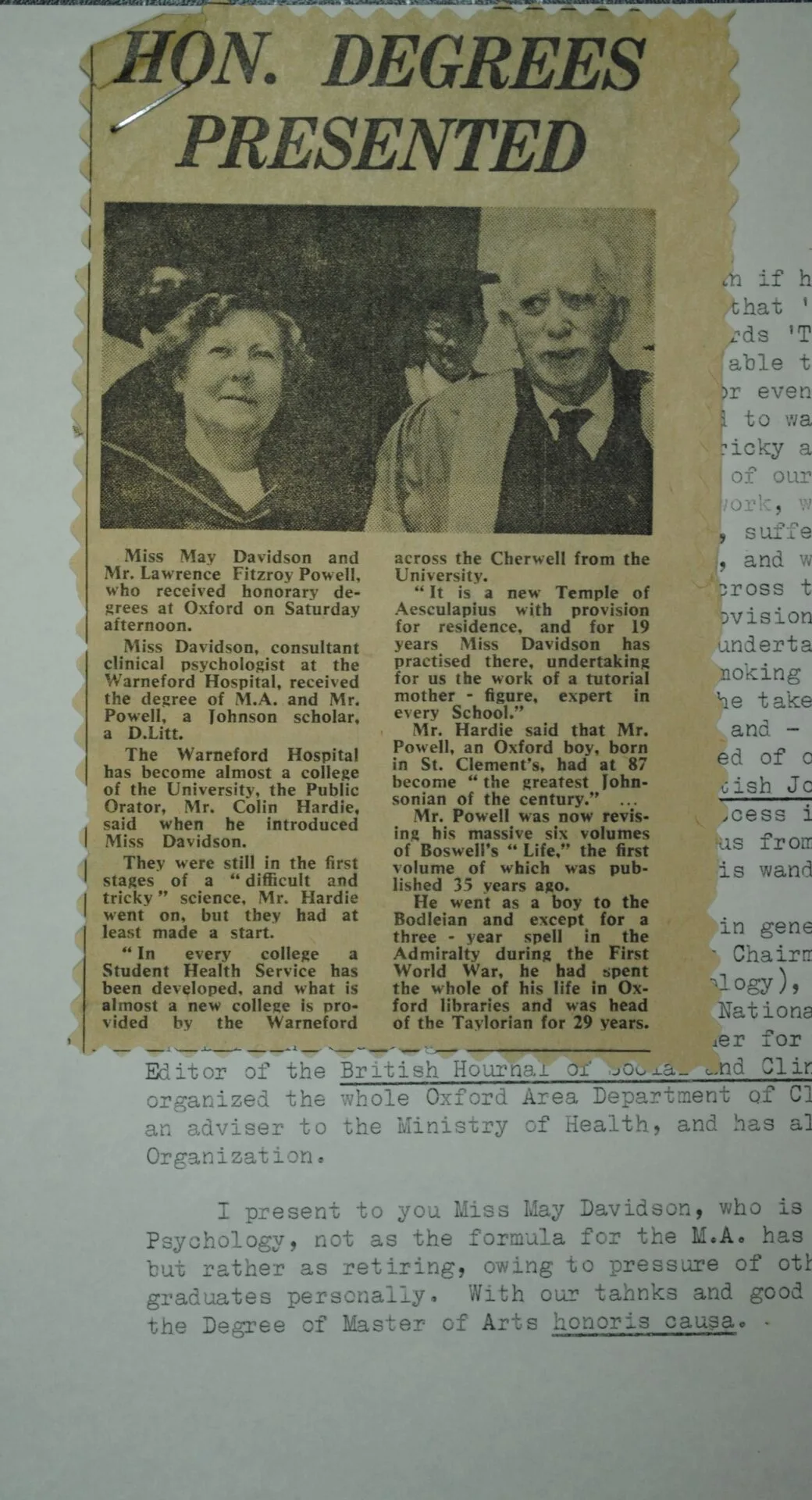
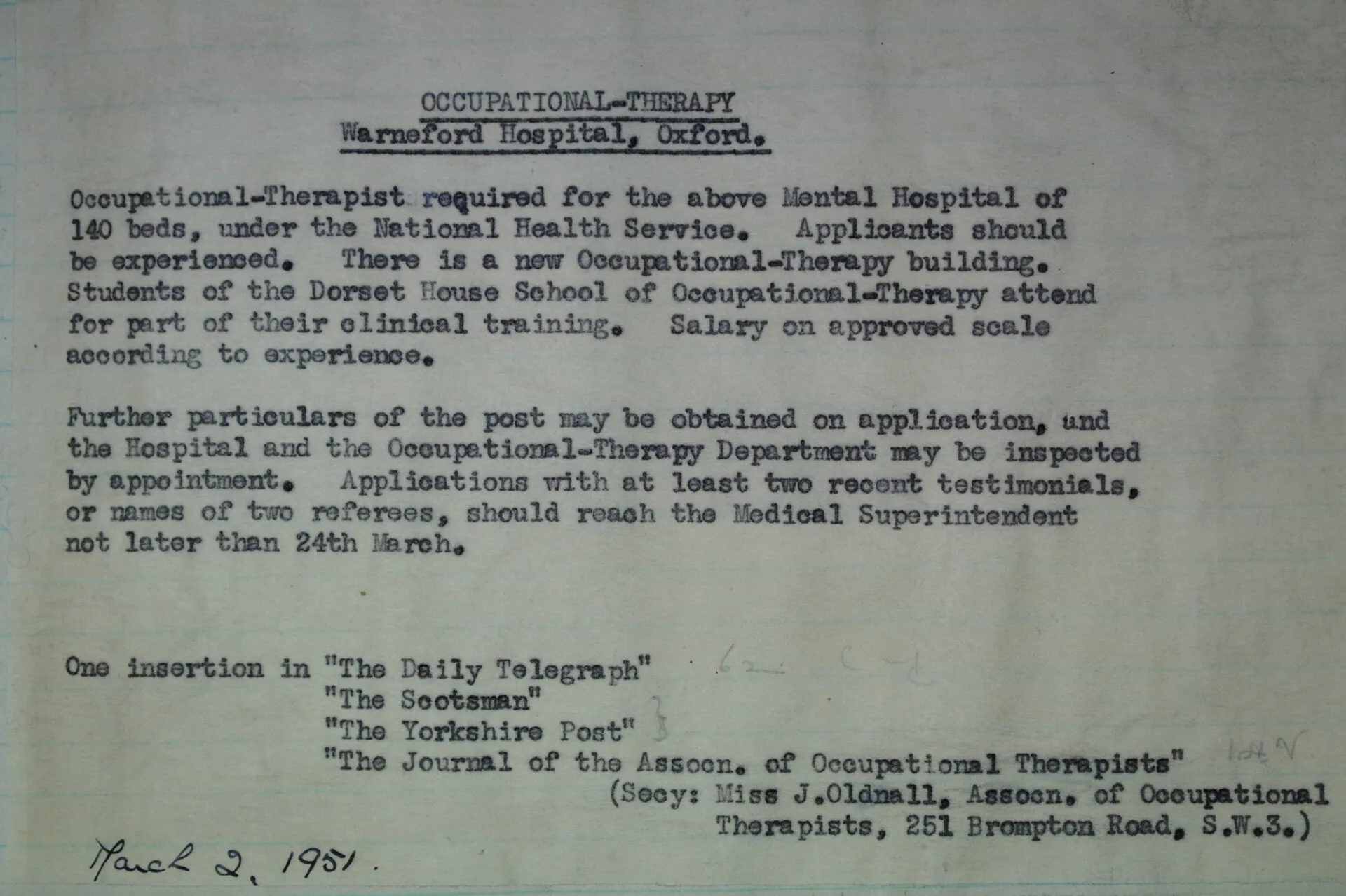
Occupational therapists began working in the hospital from 1946, in 1950 a psychologist was appointed, and from the 1970s social workers were attached to the hospital.
From the 1970s, these staff began to work in new ways, increasingly working in the community, and then as members of local teams set up throughout the county.
Staff groups continue to diversify, with the addition of other therapists, such as physiotherapists and support workers. Volunteers support the work of many voluntary agencies.
Today, multidisciplinary teams deliver treatment together.
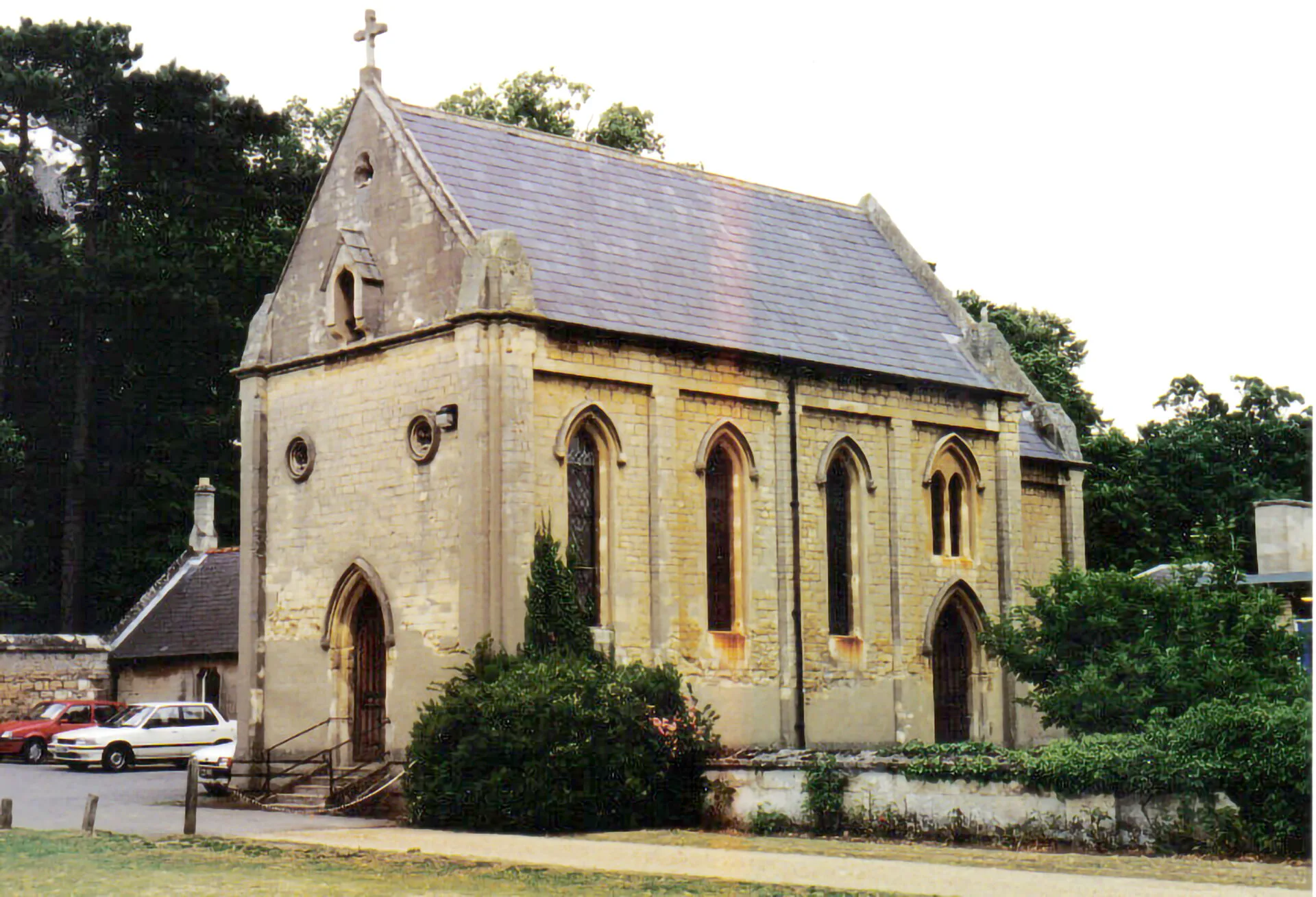
Mr Dunckley, organist at the Warneford Chapel, remembers the Chaplain, the Rev. Eric Badcock: “Fluent in Hebrew and classical Greek, no mean theologian… gentle and kindly he devoted himself exclusively to service of the Warneford. Living in Hilltop Road, less than a stone’s throw from the chapel, he was a daily visitor to all the wards, ever ready with sympathy, encouragement and a listening ear.”
Daily life at the hospital
“From dawn prayers to evening entertainments – a day in the life of the Warneford.”
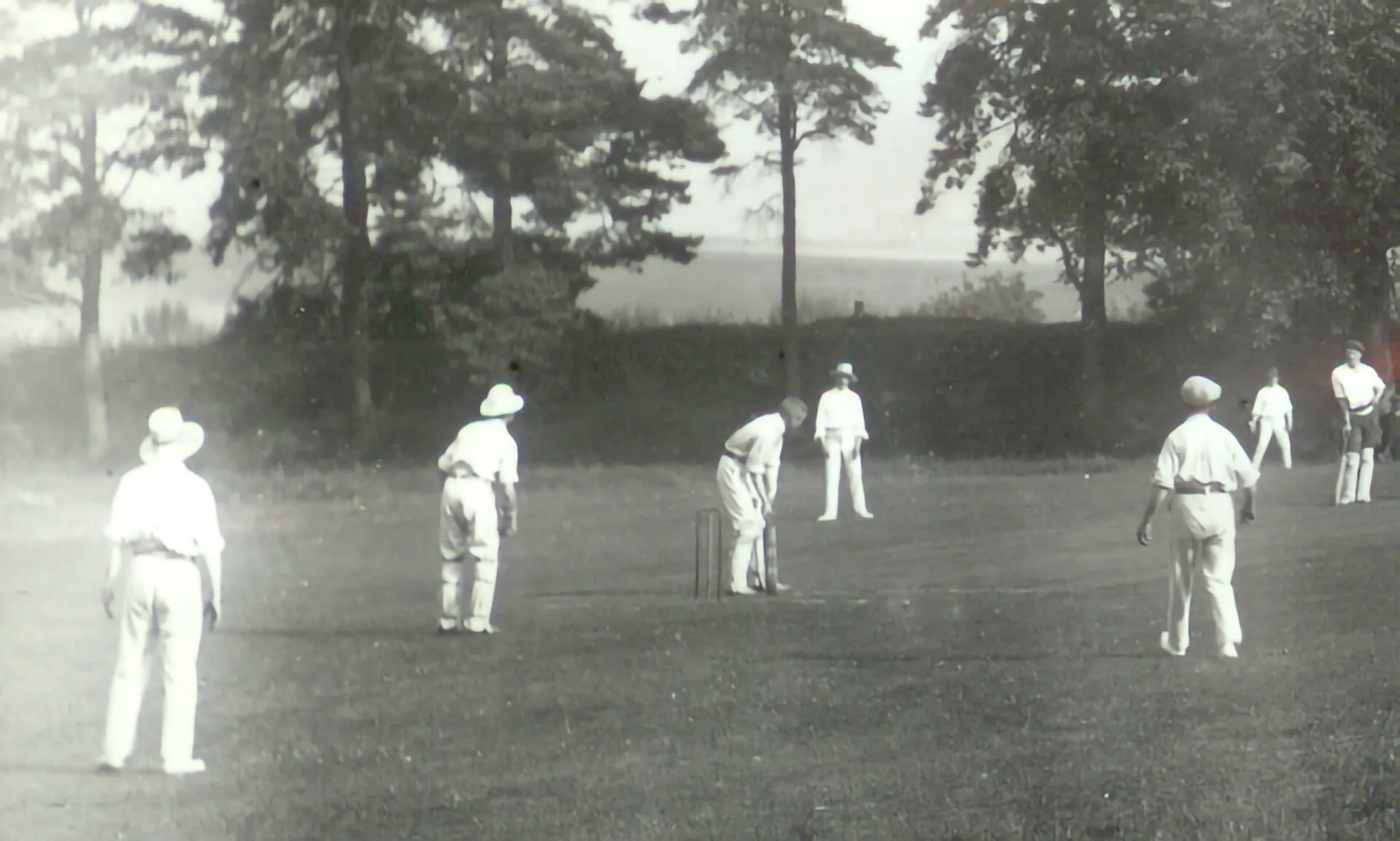
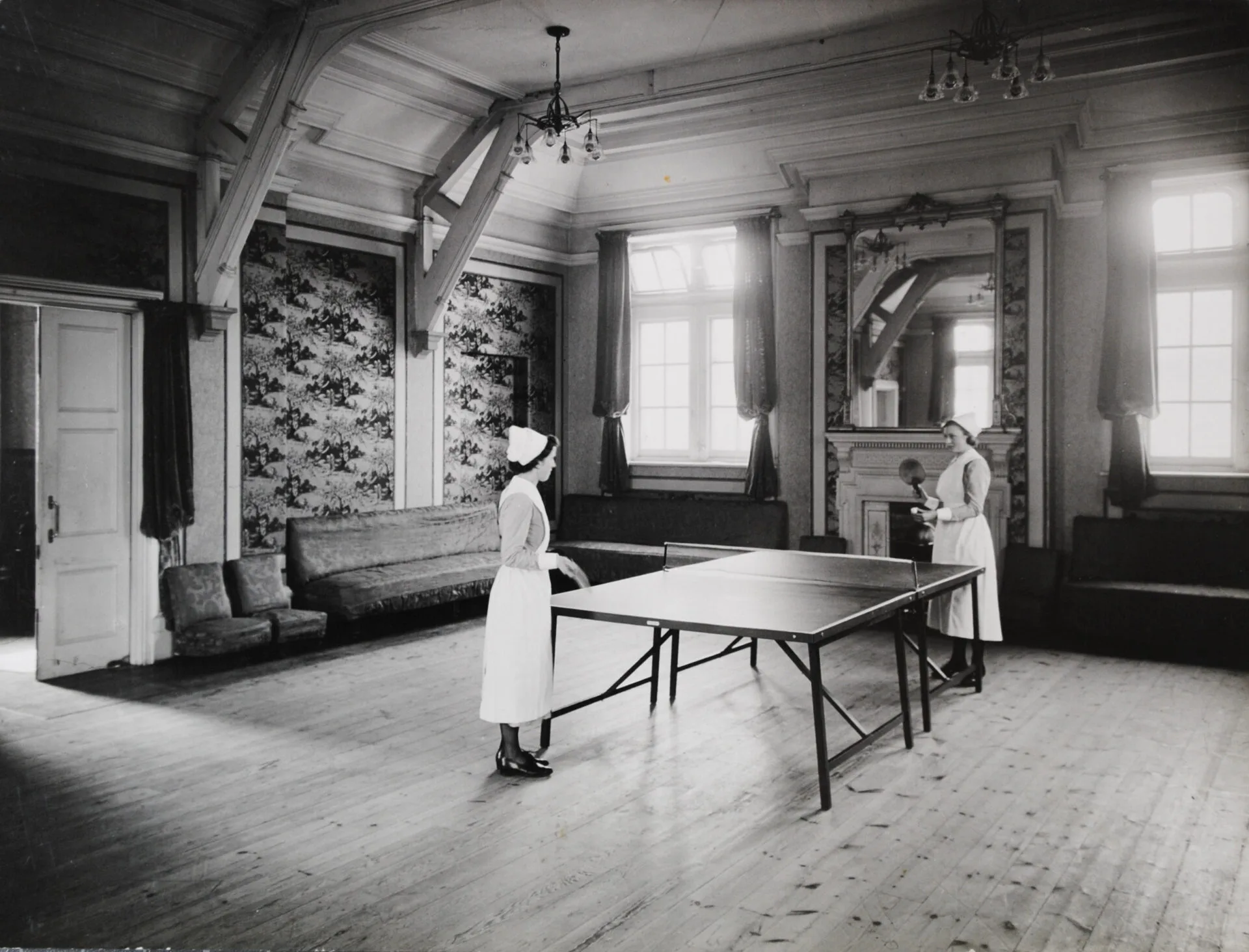
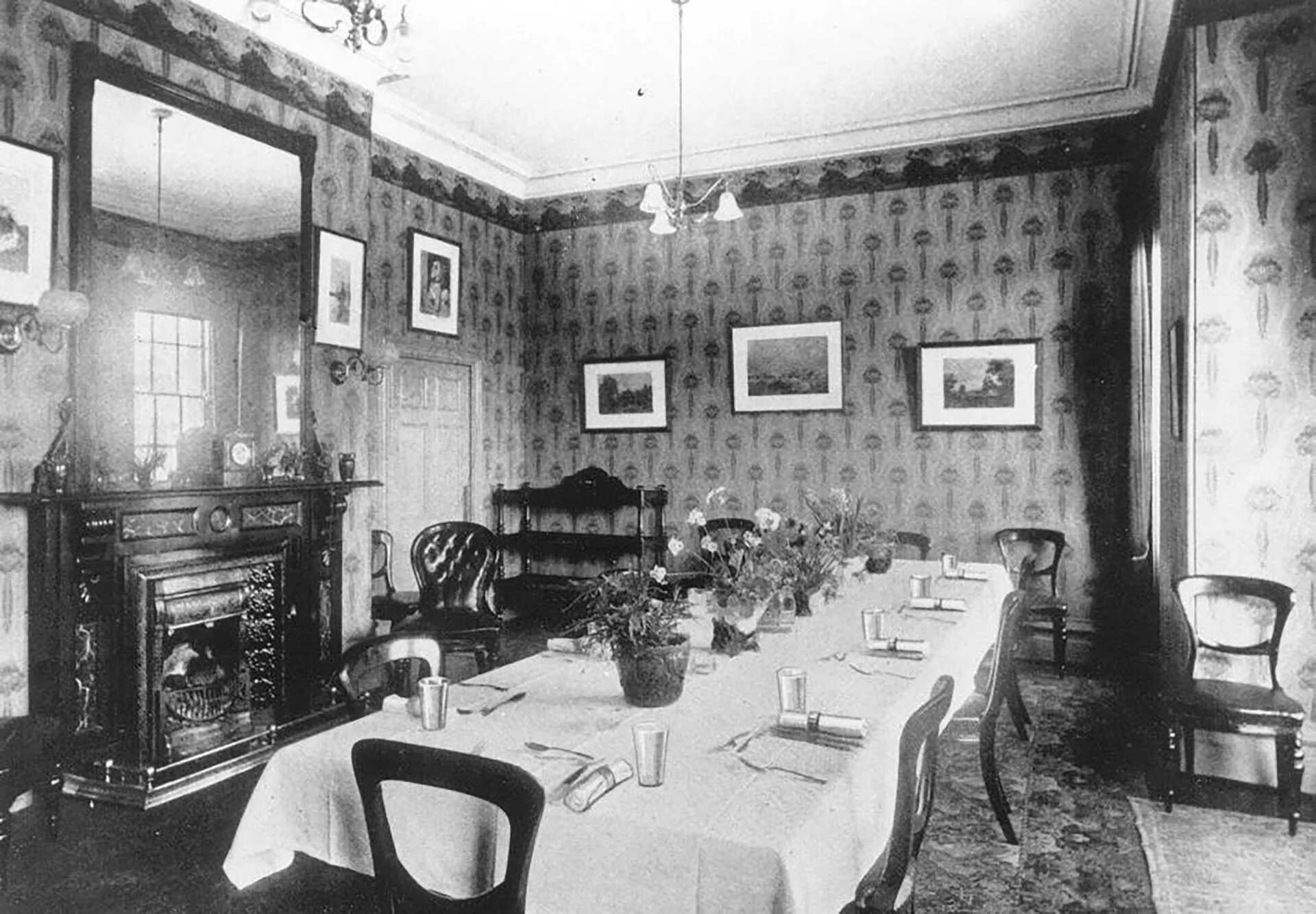
A regular pattern of daily life was established at the hospital, including amusements, exercise and activities, assisting with work in the hospital – and going to the hospital chapel twice a week. These made full use of the grounds and gardens of the hospital.
Activities were planned within a framework of ‘moral treatment’, which had been pioneered at the Quaker-run Retreat at York. This emphasised humane and compassionate care, and the promotion of a family atmosphere, in contrast to the emphasis on restraint in the larger and less well staffed public asylums, such as Littlemore Hospital, which opened in 1846.
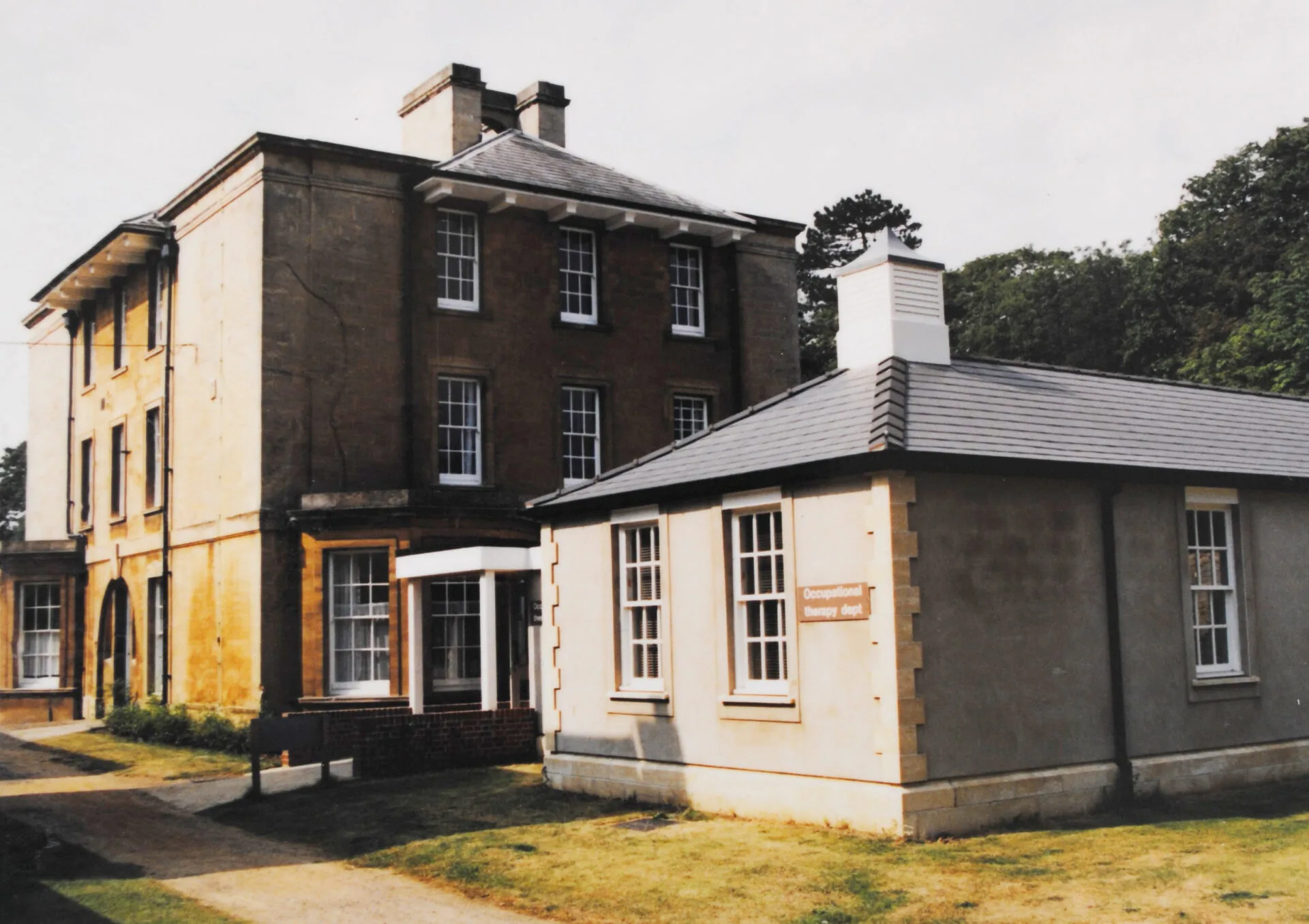
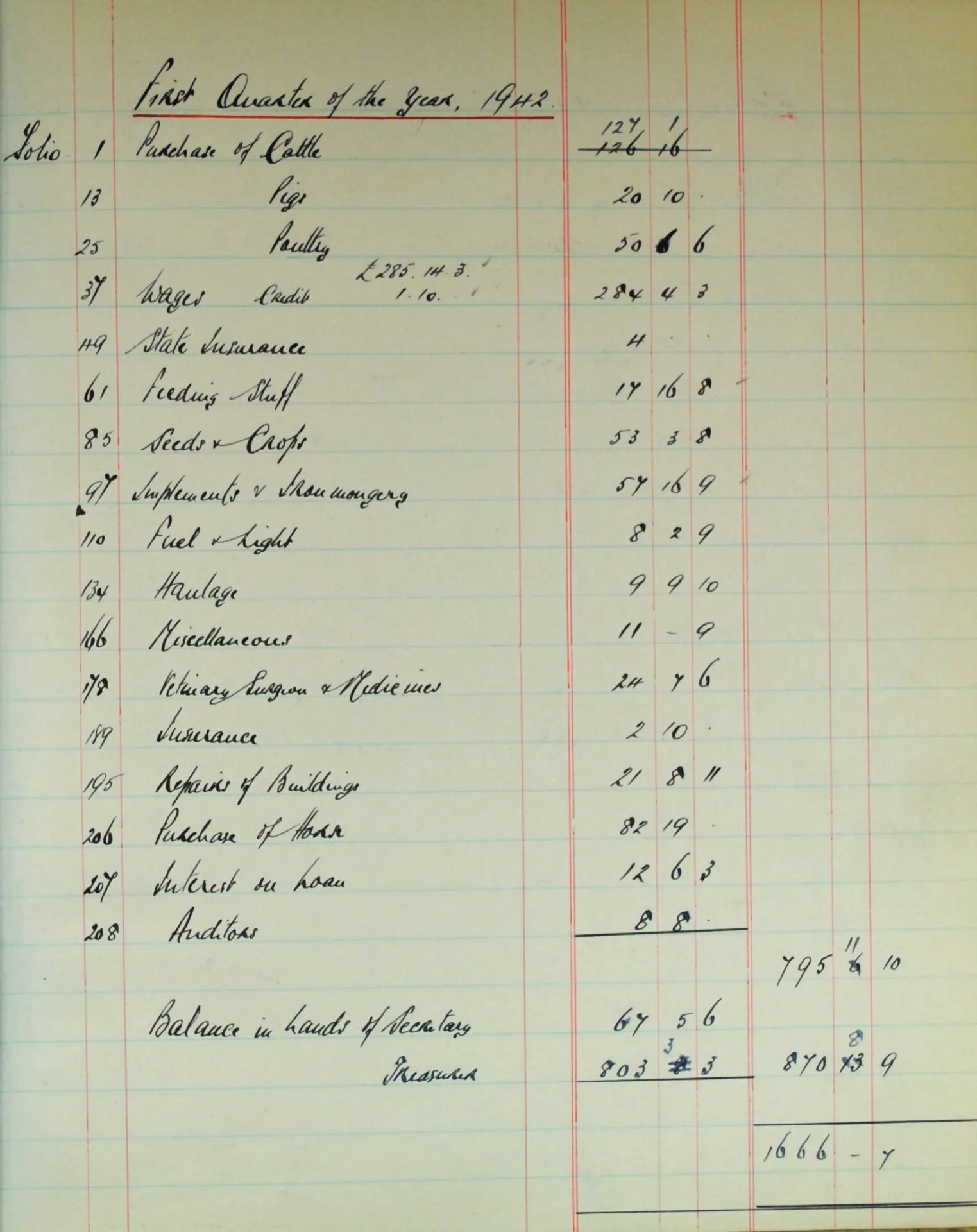
The development of occupational therapy widened the range of activities undertaken, initially focusing on arts and crafts and outdoor activities such as gardening, and until the late 1960s, working on the hospital farm.
Major changes took place after World War II, with an increasing emphasis on rehabilitation, and learning skills for ‘activities of daily living’.
All of these activities are interwoven with therapeutic sessions, including group meetings, with the aim of encouraging patients to develop their own pattern of daily living which works best for them, and which prepares them to return to home, community and work.
Running The Warneford
“From independent charity to NHS partner – adaptation and reform.”
From 1845 new laws increasingly regulated how asylums operated, including the stigmatising procedure of people being ‘certified’ as ‘lunatics’. In 1959 these procedures were abolished, but individuals may still be legally detained (or ‘sectioned’) for their own safety or that of others.
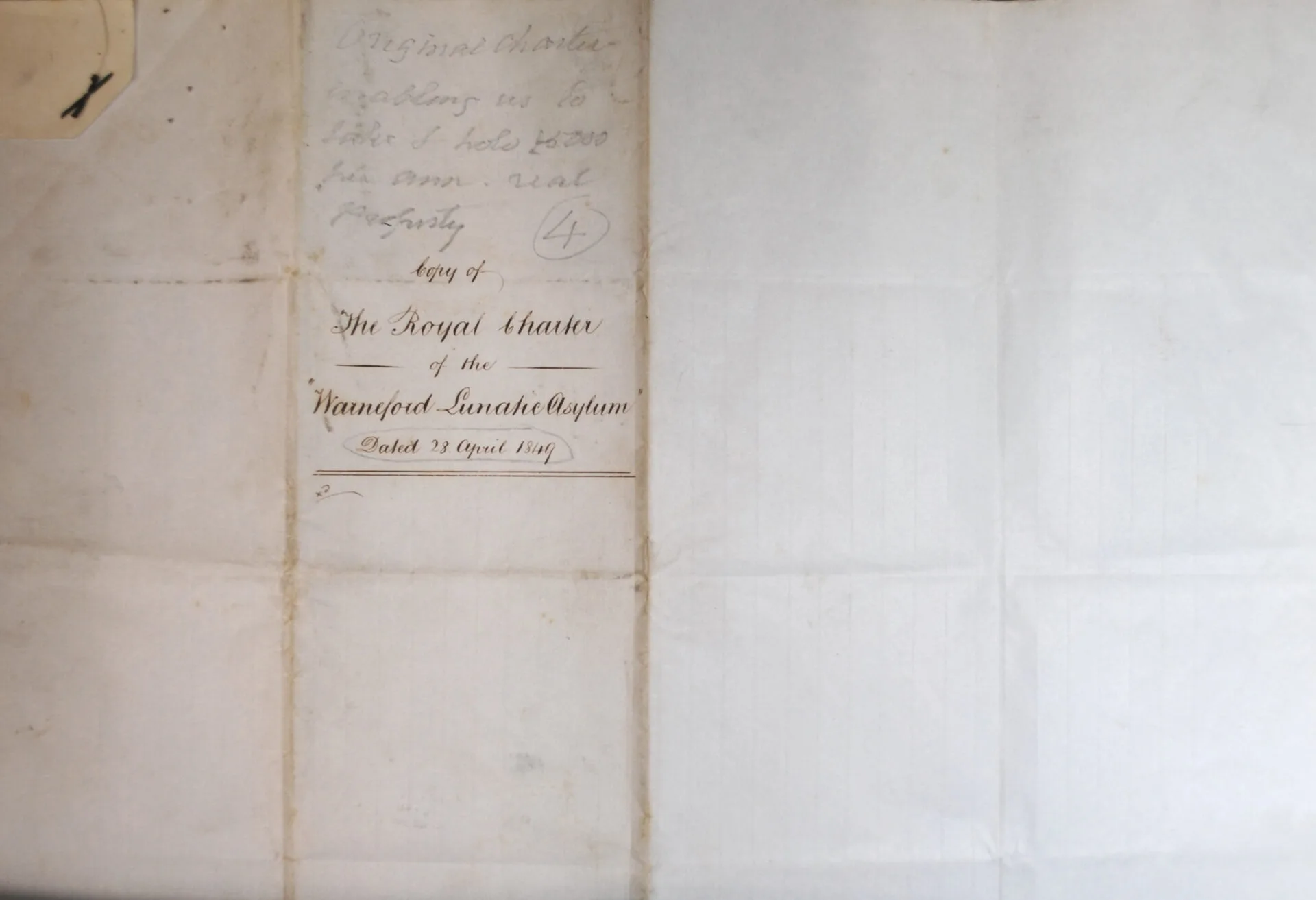
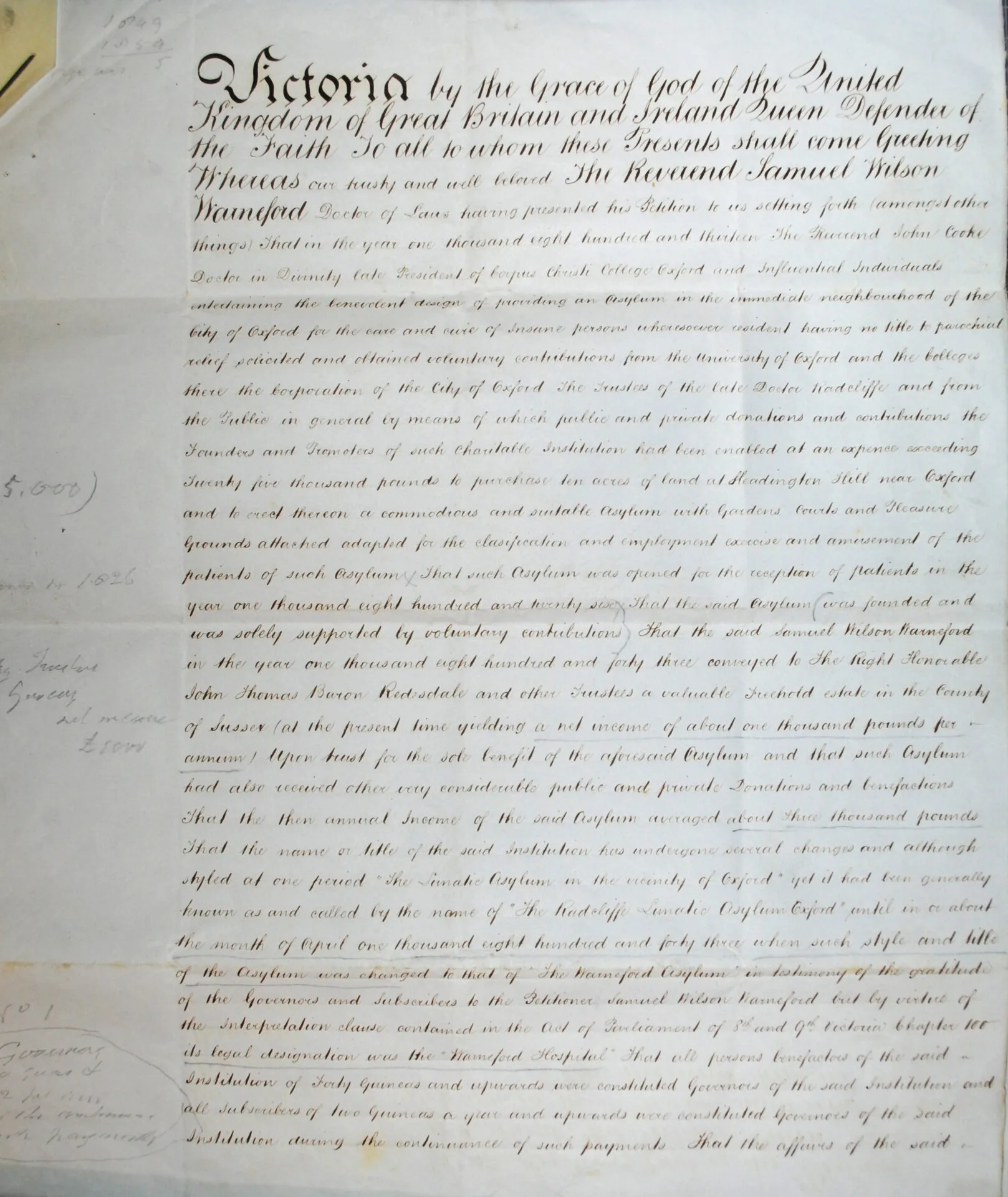
The hospital opened as a self-governing charity, managed by a committee elected from the governors. A Royal Charter was granted in 1849, ensuring University and clergy control of the management arrangements.
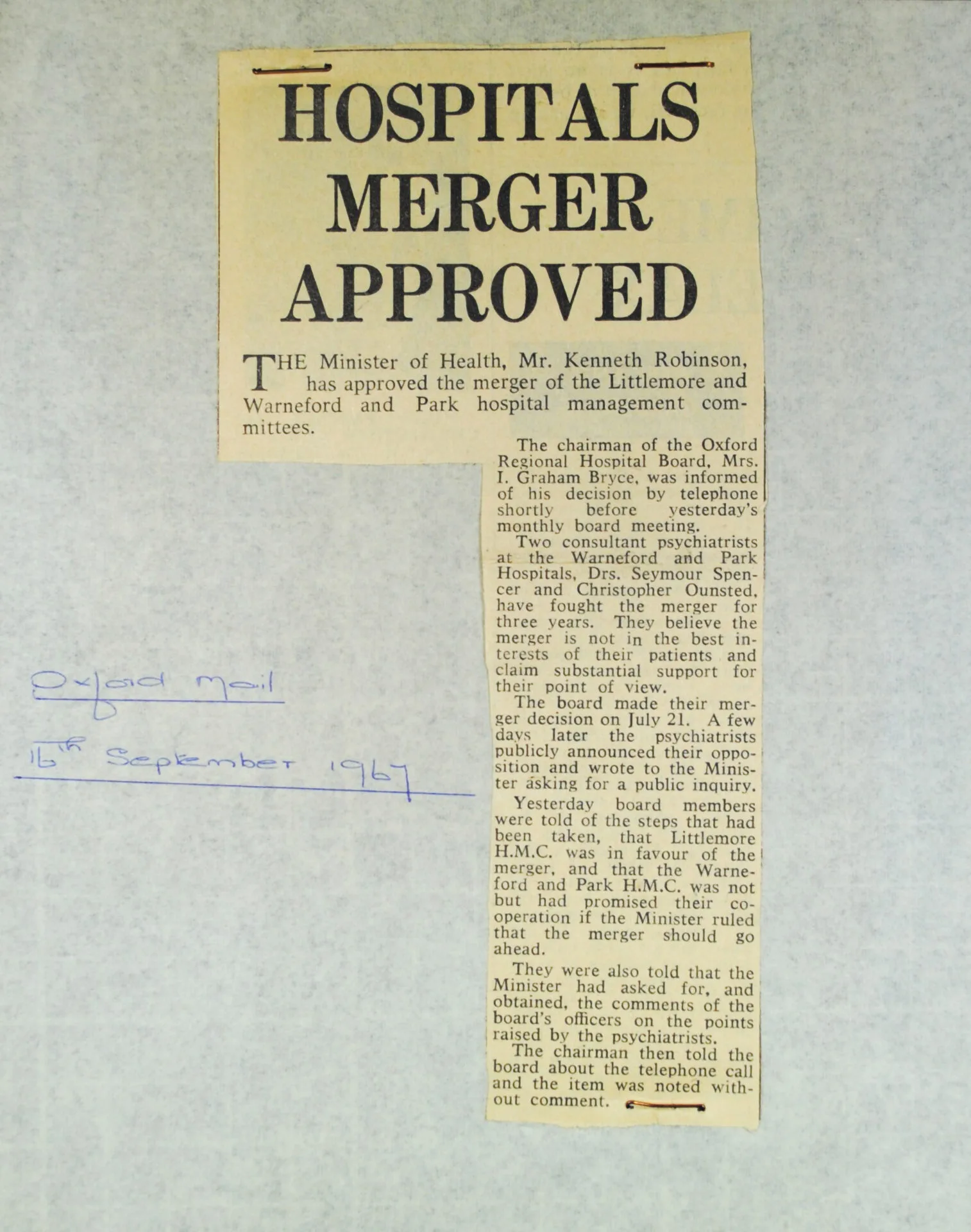
From 1948 the hospital was managed by its own NHS management committee, until it merged with Littlemore Hospital in 1968. Since the first NHS Mental Health Trust for Oxfordshire was formed in 1992, there have been a succession of organisational changes, and the range of services has broadened. The Trust now manages a comprehensive network of mental health services to both Oxfordshire and Berkshire. The Warneford Hospital is now run by Oxford Health NHS Foundation Trust, a provider of NHS mental health and community health services.