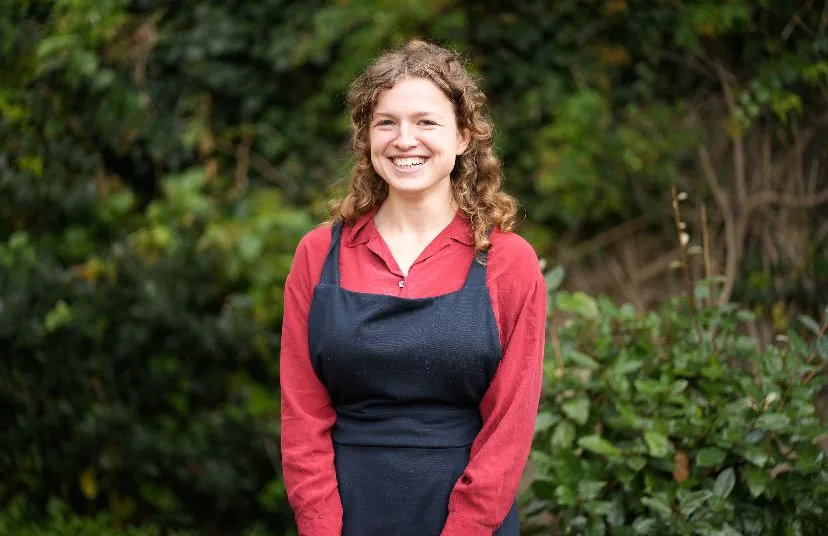
Warneford 200 Researcher, Molly Wilson, reflects on facilitating the Mind sub-project as part of the Warneford 200 programme.
The Mind sub-project was a collaboration with Mind, the mental health charity, and looked to co-produce a history of the Warneford with people who had lived experience of mental illness. The project was funded by the University of Oxford Participatory Research Fund. In these reflections, Molly describes the process of making the project happen, the challenges they faced, and the things they were surprised by. Molly also explores some of the things she would do differently if she did the project again, as well as drawing out the overarching themes and lessons that she took from the experience.
I am so happy to have had the chance to work on this project, and I hope that how much this means to me is this is clearly reflected in this piece.
Molly Wilson
The PCER-funded Mind sub-project was an opportunity for co-production with members of Mind Centres across Oxfordshire. We invited service users into the Warneford archives to produce the Warneford’s history for themselves.
This begun with visits to Mind day centres in Abingdon and Oxford, where we collected contact information, and invited service users to sessions in the Oxford Health Archives at the Oxfordshire History Centre on the Cowley Road. Over 6 sessions, we explored the archive, drawing out information and individual stories as we went. This culminated in our creating a dedicated section of the Warneford 200’s travelling exhibition.
I was so excited to be a facilitator for the project, and to co-produce material with service users. I felt keenly responsible for ensuring proper co-production took place, and took that responsibility seriously throughout. Whilst many people (myself included) will struggle to tell you with certainty what true co-production is, I was confident in what it was not. To me, it was not simply having a predetermined outcome and guiding participants to that. I wanted to let the service users’ priorities become the project’s priorities. This was challenging at times, as we had to balance the requirements of the exhibition with what we wanted to create.
After the first few sessions, I began to notice a theme: The process was of far more interest and importance than the result. Whilst the stories of the 19th century patients were fascinating and novel, they were not what we discussed the most, both during the sessions and in the plenary at the end. Instead, we talked about how we got those stories. Almost like scientists, we made hypotheses and tested them. In one session, we kept coming across the acronym ‘see P. M.’ in a death register of patients who had passed away in the hospital in the 1910s. We just couldn’t work out what it meant until someone hypothesised that maybe they were referring to the afternoon shift’s notes. We went back through the instances of the acronym, and realised this couldn’t be the case, as there was no reference to any ‘A. M.’ notes. It was not until we read on further and saw more cases that someone else made the connection between the acronym and patients who had not died of natural causes… we realised they were referring to a post-mortem record book! I checked the archive’s catalogue, and there was a post-mortem record listed, corroborating our theory further. When we discussed this after the session, a service user brought up how much he enjoyed the detective game we had played. After we worked out the meaning of ‘P. M.’, we were able to better understand the nature of the death of a patient we had been researching. This was something we would not have been able to do without constantly challenging our own theories by collecting new evidence. This was the historical process at its very best.
I think that having the freedom to search for answers, rather than having them from the outset, built the service users’ confidence in their abilities. I had been worried that not having personally explored the sources first would compromise my ability to help the other researchers understand them. Instead, it presented a healthy challenge that built the group’s momentum with each mystery solved.
In fact, the service users seemed pleasantly surprised about this element of the sessions. At first, they were somewhat disbelieving that we were not expecting them to bare their souls—as may happen in therapy or when they volunteer as research participants for medical studies—but were instead inviting them to be researchers themselves. They were given the agency to choose what we looked at, and they grappled to find the answers to the questions they asked of those sources. The feedback I received about this part of the experience was overwhelmingly positive and is an element that I will take with me onto any co-production projects I am part of in the future. Throughout this, the service users were paid for their time at the same rate as the Warneford 200’s other research assistants. This was a very important element of the project for me as it hopefully showed them the extent to which their contributions were valued.
Whilst the amount everyone who participated got from this project cannot be doubted, there are still things I think I could have done better or differently. If I were to turn back the clock, I would keep a focus on the final product (the exhibition) from the outset. I am learning that there is always a delicate balance to strike between the priorities of the communities you are co-producing with, and the desired outputs of that co-production, namely the production of material for the exhibition. I therefore think I erred too far towards the former consideration, rather than balancing it with the latter one. Furthermore, we underestimated the time the project would take, so that we actually had to cut back the number of Mind Centres to whom we offered the opportunity from four to two to keep within the budget. The practicalities of organising everyone to attend on certain days, travel arrangements, admin, and reporting on the research all took longer than anticipated.
As a historian, I often take my workplace and methodologies for granted. It can be so easy to forget the novelty of something that has become second nature. Working with the Mind service users gave me invaluable experience in co-production, project administration, and exhibition design. But, far more importantly, it reminded me to stop and smell the roses. I am incredibly lucky to have the role I do; I get to smell old books, decipher impenetrable handwriting, and unlock the stories of those who did not have a voice in the past. It will never stop being the best job in the world, and I’m so grateful to all the Mind researchers for their enthusiasm reminding me of that.
Molly Wilson is an MSc student in the History of Science, Medicine, and Technology at the University of Oxford and project facilitator for the Mind project.
